Professional Website for Painters
People looking for a painter often research online and use references and professional presentation as orientation. We build painter websites that make craftsmanship visible: strong project photos, clear service description, clean local SEO and simple enquiry. No ballast, real substance.
Important notice Legal, tax and industry-specific information concerns Germany and expressly identified EU law. It is provided for general orientation and does not replace individual advice. Last review of the cited legal situation: April 2026 Show the full notice
Unless stated otherwise, the legal, tax or industry-specific information on this page reflects the law applicable in Germany and German official and professional practice. Directly applicable EU law and references to other jurisdictions are identified separately. The information was researched with due diligence using sources available as of the stated review date. For binding guidance on your specific project, please contact the competent chamber or a qualified specialist, such as a lawyer or tax adviser. The current statutes and official regulations always prevail.
Why painting businesses need their own website
Prospective customers may research painters through local and project-specific questions before making contact. Clear services, understandable project examples and an available contact path can support this assessment. The website complements referrals without making claims about market growth, competitive outcomes or job volume.
Old-building renovators, property owners and architects often research online before calling. A website with references, team and clear service descriptions can support professional assessment without promising particular customer groups or profitable jobs and without disparaging other providers.
What belongs on a modern painter website
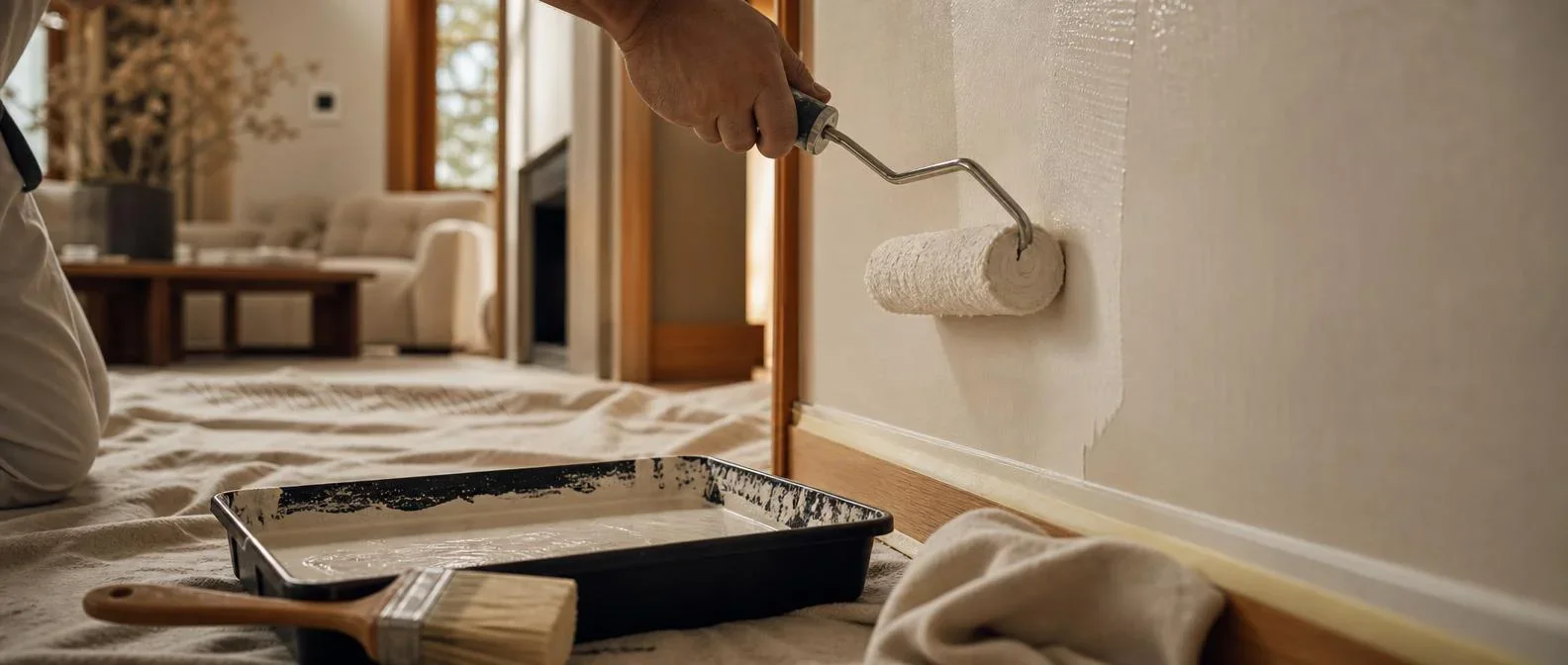
The homepage shows craftsmanship quality immediately: a strong project image (well-lit room with freshly painted wall, facade, close-up), clear claim ("Painting business in [city] since [year]"), three central actions: view services, view references, make enquiry. Master business, Handwerkskammer membership and founding year are prominently visible.
The service presentation forms the professional structure. Depending on the offer, main areas can be explained in suitable sections or on separately commissioned subpages: interior painting (wallpaper work, ceilings, wall design), facade painting (thermal insulation, renovation, graffiti protection), wallpapering (fleece, design wallpaper), floor coverings (laminate laying, parquet oiling/varnishing), plastering (Q1-Q4 surfaces), lacquer work (window frames, radiators, doors), decorative techniques (wipe technique, stucco, gold edging). Each page explains: what do we do, how does it proceed, what should customers know, which materials do we use.
A reference gallery can be an important trust element. Depending on approved or later-created material, we show a suitable selection of completed projects with a description of the job (object, scope, challenges), materials used. For private residential projects we anonymise address and owner - only consent for image use is needed. Commercial projects may be advertised with full client name if contractually regulated.
The team page shows master, journeymen and apprentices with photo and role. That is important in craft sectors: customers want to know who will work in their apartment. Team photos signal professionalism, reliability and business size. A painting business with 5 journeymen appears more substantial than a nameless firm without faces.
An enquiry form can structure first contact as an optional extension. Useful fields include: name, phone, object (address or postal code), planned service (selection), description (free field), a short description; images can be exchanged directly after first contact and preferred appointment. The more info comes beforehand, the faster you can call qualified - instead of three on-site appointments just for measurement.
Local findability - with or without external business profile
The service area depends on location, team, service and project scale. The website names the places or regions genuinely served and structures local details accordingly: local keywords in headings and body text ("painting business in [city] and [neighbouring city]", "facade painting in the [region] area"), Schema.org markup (HomeAndConstructionBusiness, Painter, LocalBusiness), consistent NAP data.
An external business profile can complement the website but remains a channel managed by the business. The website can link to it or embed approved testimonials by separate agreement. Setup, ongoing profile maintenance and handling individual reviews are not automatically part of the website service.
Mobile, fast, practice-ready
Many searches for local trades are made on smartphones - often spontaneously, when something is broken or neighbours gave a tip. A slow website with a hidden phone number makes this mobile first contact harder. We build leanly and without unnecessary plugin dependencies, so the page loads quickly, click-to-call is always within thumb reach and images are optimised for mobile data.
Especially important: the inquiry path must be short. Request form without login, without superfluous fields, without file uploads; images are exchanged directly after first contact where needed. No captcha that frustrates on mobile - instead honeypot spam protection in the background. This can simplify mobile first contact without guaranteeing a particular number of enquiries.
Explain Surfaces, Use and Project Flow Clearly
Painting work differs by more than interior and exterior. The condition of the substrate, future use, required durability and existing coatings shape the process. An occupied home requires a different approach to dust protection, furniture covering and daily scheduling from an empty property. In a medical practice or shop, short work windows, low-odour products and phased execution may matter. The website should explain these differences in everyday language and mention only processes the business genuinely offers.
For facades, useful information includes inspection of the existing surface, cleaning, repairs, primer and coating. Statements about insulation, mould, hazardous materials or listed building elements remain cautious because additional specialists may be needed after assessment. Interior content can explain substrate preparation, filling quality, wallpaper, lacquer work and decorative techniques. Instead of broad quality claims, the page shows how consultation, samples and execution are organised.
A project-flow section can describe the route from first enquiry to handover: an initial discussion, a site visit where required, a quotation with a defined scope, scheduling, protection measures, execution and a joint review. This is not a rigid promise for every project. It provides orientation and makes clear which preparation or decisions are needed from the customer.
References and Colour Advice Without a Material Barrier
Useful references combine images with concise professional context. Relevant details may include the area, substrate, intended effect and particular constraints. An older apartment with cracked plaster tells a different story from a newly built commercial unit or a weather-exposed facade. Addresses, names and private details remain excluded. Existing project images are welcome, but a finished photo archive is not required to start. Approved photographs can be added later or planned as a separate media service.
Colour advice can be described as a working method without deciding the customer taste in advance. The website can explain whether the business uses sample boards, test areas, colour cards or digital views and how it considers light, room size and existing materials. The agreed physical sample remains authoritative rather than a screen representation. This avoids false expectations while showing that design begins before work starts on site.
Property managers, architects and commercial clients may also need information about capacity planning, documented contacts, work in occupied buildings and clear service boundaries. This can sit in a B2B section; an additional page is commissioned only where enough original substance exists. Enquiry forms, review links and external profiles are optional additions rather than prerequisites for a complete and credible core website.
Plan for Occupied, Empty and Commercial Interiors
How a property is used affects communication and execution. In occupied rooms, access, furniture protection, daily handover and the sequence of rooms matter. Empty properties may allow larger connected work areas, while commercial premises often require agreed time windows and phased release. The website can explain these processes through typical project situations without promising one standard duration.
Preparation requires reliable details about areas, substrates, existing coatings and requested work. Photographs can help after first contact but do not always replace a site visit. An optional enquiry form therefore remains concise. Measurement, material selection and a binding quotation follow the business process rather than being produced automatically by an online calculator.
After completion, care guidance for the surfaces used can provide a useful service. It is tailored to material and use and avoids blanket durability promises. Recurring maintenance, touch-up work in commercial premises and framework agreements with property managers appear only where the business genuinely offers them.
Frequently Asked Questions about Painter Websites
Is a website worth it for a painting business - we get enough jobs through referrals?
Referrals remain important for many painting businesses. A solid website can complement them by helping prospective customers assess services, references and contact paths before calling. In a new service area or during uneven utilisation, it provides a directly controlled information channel without guaranteeing customers or jobs.
What imagery belongs on a painter website?
Before-after photos of completed projects are gold. Interiors (living room, kitchen, bedroom, staircase), facades, close-ups (edges, wipe techniques, plastering), team at work, tools/material. Existing project images are welcome but are not a prerequisite for starting the project. A suitable image selection and further media can be developed within the agreed scope or added later, with the necessary permissions reviewed before publication.
Do I have to state prices or hourly rates?
No - and usually counterproductive. Painting work depends too much on effort, substrate condition and material to give flat prices. Better: rough orientation values ("interior painting from EUR 8-15 per m² net depending on effort") or the note "Free on-site quote with fixed price". That deters bargain hunters and attracts serious customers.
Which services should have their own pages?
The most important areas can be presented in clear sections or on separately commissioned subpages according to the actual service range: interior painting, facade painting, wallpaper, floor coverings (laminate, vinyl, parquet surface treatment), plastering, lacquer work, decorative techniques (stucco, wipe technique). This creates space for specific search questions without promising particular rankings or a fixed number of pages.
What about trade master licence (Meisterpflicht)?
In Germany painting and varnishing is a regulated trade (Anlage A, Handwerksordnung). Your imprint must name master certificate, Handwerksrolle entry and the competent Handwerkskammer. These mandatory entries are trust signals - we place them prominently in footer and About page. That sets you apart from unqualified "painter services" without qualification.
What does a painter website cost?
A compact, professionally developed website starts from EUR 599. Additional pages, languages, forms, media and functionality can be added to match the required scope. Managed hosting and ongoing support start from EUR 59 per month. Our Website pricing & options page explains the professional foundation and the available ways to expand it.
More dedicated services in this industry
Looking for a website for a related profession? These dedicated pages might also be relevant:
Website for Electricians & Electrical Contractors
Present electrical installation, smart home, maintenance, emergency service notes, qualifications, service area and contact paths clearly - for electrical contractors with planned and urgent enquiries.
View electrician website →Website for Carpenters & Joiners
Present furniture making, interior fit-out, kitchens, doors, windows, materials, project gallery and enquiry paths in a high-quality way - for businesses whose work relies strongly on photos and references.
View carpenter website →Website for Roofers
Present roof renovation, re-roofing, flat roofs, insulation, storm damage, references, service area and contact paths clearly - for roofing companies with a regional focus.
View roofer website →Website for Plumbing, Heating & HVAC Businesses
Structure plumbing, heating, HVAC, bathroom renovation, maintenance, modernisation, emergency contact and service area clearly - for plumbing and heating businesses with advisory and service offerings.
View plumbing & heating website →Website for Locksmiths & Door Opening Services
Show door opening, cylinder replacement, burglary protection, service area, availability and transparent contact paths clearly - for reputable providers who must build trust before the call.
View locksmith website →Website for Drain Cleaning & Plumbing Emergency Services
Structure emergency help, drain cleaning, sewer inspection, maintenance, service area, availability and enquiry paths clearly - for businesses with urgent local search demand.
View drain cleaning website →Website for Electrical Emergency & Small Installation Services
Present emergency service, cooker connections, sockets, light fittings, small jobs, service area and appointment paths clearly - for planned and urgent electrical enquiries.
View electrical emergency website →Website for Landscape Gardening
Show garden design, paving, terraces, maintenance, seasonal services, project photos and enquiry paths clearly - for businesses with a strong visual portfolio.
View landscape gardening website →Website for Car Repair Shops
Present inspection, repair, tyre service, MOT, brand expertise, workshop photos, appointment path and location clearly - for workshops with regional customers.
View car repair website →More industries
What We Have Already Delivered
Our reference project shows a custom website with a multilingual structure, animated landing page, interactive map and automatic contact form - built from scratch instead of a website-builder template.
View reference project →Full details about the professional Starter foundation, pricing and flexible extensions are available on our “Website pricing & options” page.
View pricing & options →Ready for your new painter website?
In a free initial consultation we look at your business, focus areas and typical job sizes. You get a concrete offer suited to your size - with an individually planned structure and ongoing support. Existing images, finished copy or a logo are welcome but are not prerequisites for starting the project.
Discuss your painter website