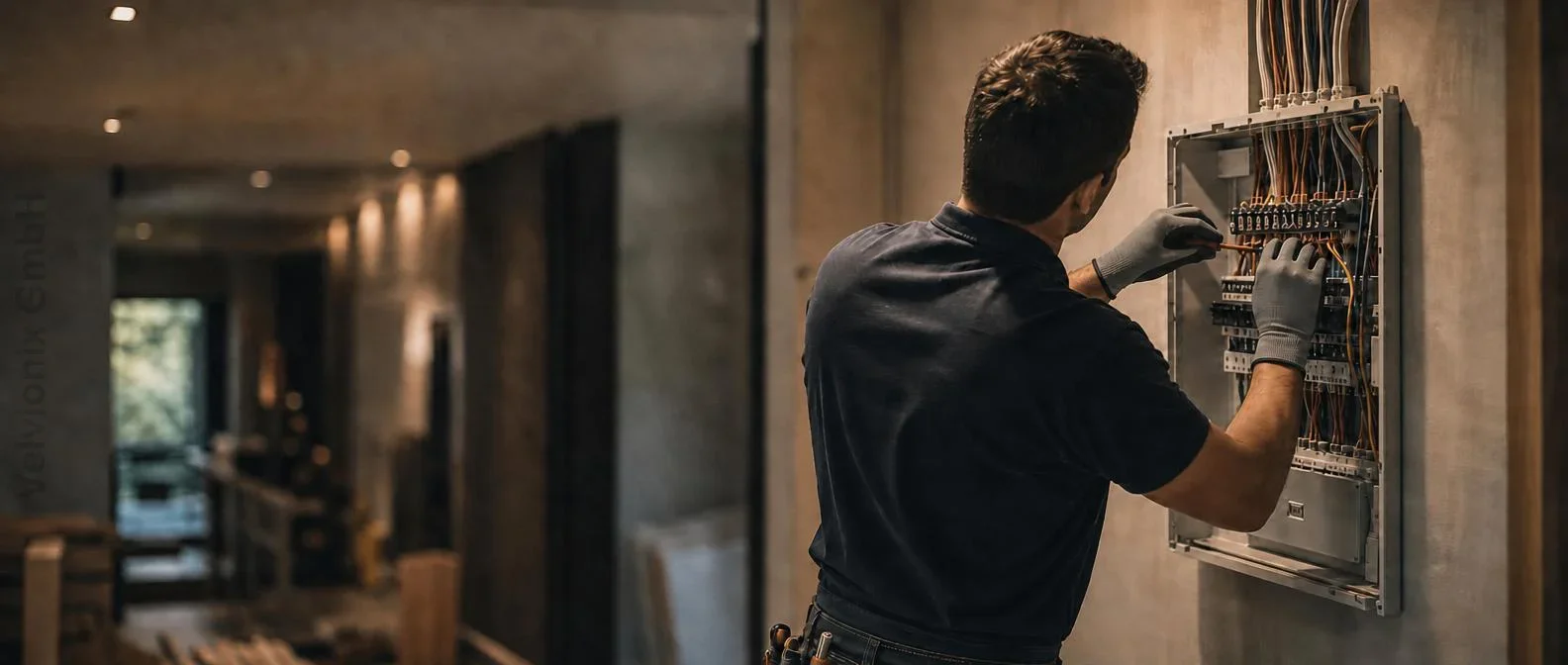
Professional Website for Electricians
Electrical businesses combine general installation with different specialisms such as photovoltaics, charging infrastructure and building technology. We develop websites that present confirmed qualifications, actual service priorities and clear contact paths transparently.
Important notice Legal, tax and industry-specific information concerns Germany and expressly identified EU law. It is provided for general orientation and does not replace individual advice. Last review of the cited legal situation: April 2026 Show the full notice
Unless stated otherwise, the legal, tax or industry-specific information on this page reflects the law applicable in Germany and German official and professional practice. Directly applicable EU law and references to other jurisdictions are identified separately. The information was researched with due diligence using sources available as of the stated review date. For binding guidance on your specific project, please contact the competent chamber or a qualified specialist, such as a lawyer or tax adviser. The current statutes and official regulations always prevail.
Why electrical businesses need their own website
Prospective customers research both general electrical work and specific topics such as photovoltaics, wallboxes, lighting and building technology. The space each topic receives depends on the business actual offer. The page explains differences, prerequisites and contact paths without making claims about search volume, growth in demand or commercial outcomes.
Businesses that explain these specialisms clearly make professional assessment easier for prospective customers. A substantial website with confirmed qualifications, suitable references and clear technical descriptions can support acquisition, but it cannot guarantee particular project sizes or enquiries.
What belongs on a modern electrician website
The homepage shows your core competencies at a glance: electrical installation, photovoltaics, EV wallbox, smart home, modernisation. A strong image (installation, PV roof, team at work), clear claim ("Your certified electrical business in [city] - installation, PV and smart home"), three central actions: view services, make enquiry, call. Master business, founding year, specialist seals are prominent.
Services form the professional structure. Depending on the actual offer, the main areas can be explained in suitable sections or on separately agreed subpages: electrical installation (new build, renovation, distribution boards), photovoltaics (planning, assembly, registration, storage, maintenance), EV wallboxes (single-family home, business, load management), smart home (KNX, manufacturer-specific systems, lighting), modernisation (old building refurbishment, electrical check, E-check), lighting design, fire protection/BMA, emergency service (optional). Each area explains the actual work, important prerequisites, the usual process and factors affecting effort or price. Funding is covered only as general orientation with links to current responsible bodies.
Photovoltaics deserves special attention. A dedicated PV page with typical system sizes (5-10 kWp single-family, 10-30 kWp business), subsidy options (KfW, BAFA, feed-in tariff), storage solutions and reference systems answers common questions. A profitability calculator would be an optional custom extension; visibility, rankings and customer conversion cannot be guaranteed from it.
Wallboxes and charging infrastructure can be explained through connection capacity, the network-operator process, load management and the number of charging points. Funding remains general and appears only where it can be maintained reliably. Private and commercial projects follow different planning and coordination paths.
The reference portfolio shows a selection of completed projects suited to the material available with category (private, business, industry), scope, used technology and image. For PV systems the kWp rating belongs, for wallboxes the quantity, for smart home the technology. This makes completed experience understandable without disparaging other providers.
Make certifications and qualifications visible
For electrical work, qualifications and responsibility must match the services offered. The website shows only confirmed details such as master-craftsman status, registration and relevant training, linking them to the appropriate service. It does not infer a particular type of job or commercial result from them.
We build a "Certifications" section or integrate the seals discreetly in footer and About page. Association and certification logos look professional without being pushy. Each seal ideally links to the issuing source - that strengthens authenticity and supports transparent presentation of the qualification without promising a ranking effect.
Local findability and business customers
The service area depends on location, team, service and project type and is described through the places or regions genuinely covered. Clear contact details and suitable structured data can support technical classification. An external business profile remains a channel managed independently by the business. For business customers (industry, housing associations, municipalities) B2B content is additionally important: reference projects with order volumes and contact quotes (with consent) - that can support professional pre-screening by business customers.
For commercial clients, the website can provide supporting information on references, contacts, service boundaries and documented interfaces. It can support pre-screening but does not determine an award.
Organise Service Priorities Around Real Project Situations
An electrician website becomes easier to understand when it explains typical project situations instead of merely listing technical terms. During the modernisation of an older building, owners may need information about the existing installation, new circuits, the meter position, protective devices, cable routes and coordination with other trades. A new-build project focuses more on electrical planning, lighting, data networks, shading and future expansion. Commercial clients may additionally look for documented processes, stable contacts, scheduling and work outside their operating hours. Clear entry points can reflect these differences even on a compact website.
Photovoltaics, charging infrastructure and connected building technology should become prominent topics only where the business genuinely plans, installs or supports them. The key is a precise boundary: which work is carried out by the team, which qualifications are confirmed, and which steps involve the network operator, planning partners or other specialist contractors? This helps prospective customers form a realistic view of the scope before making contact. Additional detail pages are commissioned separately; Starter can explain the main priorities in well-structured sections.
Maintenance, inspection and fault finding also need their own context. Recurring inspections for rented or commercial properties, modernisation of older distribution boards and investigation of an unclear fault follow different processes from installing an extra socket. The website can explain which information is useful in advance without offering remote diagnosis or promising a fixed amount of work. The result remains relevant to both smaller tasks and more extensive projects.
References, Qualifications and Project Preparation
References are most useful when they show more than a finished result. A short project description can set out the starting point, task, work completed and relevant interfaces, such as replacing a distribution board in an occupied building, installing charging points for a small fleet or fitting out a medical practice. Images are optional. Approved existing photographs can be used, added later or created through a separately agreed media service. A project can still be described credibly through confirmed facts when no finished image archive exists.
Qualifications belong beside the services for which they are relevant. They may include master-craftsman status, registration, training or confirmed knowledge of particular systems. The website explains these details without suggesting that a certificate guarantees jobs, prices or a particular commercial outcome. Expired, unclear or person-specific credentials are not presented as a blanket qualification for the whole business. Prospective customers can therefore see who is responsible for which type of work.
The contact path should match the project. For planned work, name, location, building type, requested service and a suitable callback period are often sufficient. During a fault, the phone number remains more useful than a long form. A form is a separately agreed extension and should stay concise. File uploads, appointment booking, calculators and links to operational systems are added only where they support the real workflow and have been explicitly commissioned.
Address Private Customers, Businesses and Property Managers Clearly
Private customers usually want to know whether their specific project fits the business and what the next step is. Commercial clients may additionally consider working windows, documented inspections, recurring services and coordination with internal contacts. Property managers often need a clear route for approvals, building access, tenant communication and invoice allocation. The website can reflect these expectations in distinct sections without automatically creating a separate page for each audience.
Team profiles support professional allocation. They can show responsibilities, qualifications and project experience where every detail is confirmed and approved. Private biographies or complete personnel data are unnecessary. The useful point is which contact is responsible for planning, service work, commercial projects or particular technical priorities. Vacancies receive their own area only where current information and a reliable application path exist.
The website remains a working resource after launch. Changes to services, availability, team and qualifications should be reflected promptly. Ongoing editorial support, new references and additional technical pages are separate services. Starter provides a stable structure without committing the business to a blog or fixed publishing schedule.
Frequently Asked Questions about Electrician Websites
Why do electrical businesses need their own website?
Electrical work is a matter of trust - and highly demanded. Customers google "electrician [city]", "electrician emergency [city]", "photovoltaics [city]", "EV wallbox installation [city]". A clear website can support suitable enquiries for renovations, PV systems, smart home and charging infrastructure. Your own website signals qualification, business size and seriousness - exactly what customers need for electrical work.
What about photovoltaics, wallboxes and smart home?
These areas are frequently researched. Depending on the actual offer, dedicated content areas or separately commissioned subpages can address questions about PV systems, EV wallboxes and smart home without promising specific rankings. Important: information on subsidies (KfW, BAFA), obligations (grid registration, certification per TAR medium voltage) and reference projects - details that can support professional assessment.
Do I have to offer an emergency service?
No - but if you have one, it belongs prominently on the page. Emergency searches ("electrician emergency [city]", "power outage electrician") express a clear urgent need and require realistic information on availability and pricing logic. If emergency service fits your profile, we build a dedicated page with availability, flat rates and service area. Otherwise we focus on the planned services the business actually provides.
What image material for references?
Finished installations are strong images: clean distribution boards, modern lighting installations, PV modules on roofs, wallboxes at entrances, smart-home hubs. Work situations (team on roof, cabling), certificates, test protocols (anonymised). Existing project images are welcome but are not a prerequisite for starting the project. Image selection and optional media are planned to suit the agreed scope, and publication requires the necessary permissions.
Which qualifications need to be on the website?
Electrical trade is a regulated trade (Anlage A, Handwerksordnung) in Germany. Depending on the business form and actual activity, the legal notice can require professional and register information that should be confirmed by the chamber or specialist advisors. Additionally useful: certifications (TAR medium voltage for PV, specialist for fire protection, smart-home certifications and manufacturer-specific partner programmes). Only confirmed qualifications and memberships are shown.
What does an electrician website cost?
A compact, professionally developed website starts from EUR 599. Additional pages, languages, forms, media and functionality can be added to match the required scope. Managed hosting and ongoing support start from EUR 59 per month. Our Website pricing & options page explains the professional foundation and the available ways to expand it.
More dedicated services in this industry
Looking for a website for a related profession? These dedicated pages might also be relevant:
Website for Painters & Decorators
Present services, project photos, facade work, interior painting, colour advice, service area and enquiry paths clearly - for painting businesses that want to convince visually and be found more easily in their region.
View painter website →Website for Carpenters & Joiners
Present furniture making, interior fit-out, kitchens, doors, windows, materials, project gallery and enquiry paths in a high-quality way - for businesses whose work relies strongly on photos and references.
View carpenter website →Website for Roofers
Present roof renovation, re-roofing, flat roofs, insulation, storm damage, references, service area and contact paths clearly - for roofing companies with a regional focus.
View roofer website →Website for Plumbing, Heating & HVAC Businesses
Structure plumbing, heating, HVAC, bathroom renovation, maintenance, modernisation, emergency contact and service area clearly - for plumbing and heating businesses with advisory and service offerings.
View plumbing & heating website →Website for Locksmiths & Door Opening Services
Show door opening, cylinder replacement, burglary protection, service area, availability and transparent contact paths clearly - for reputable providers who must build trust before the call.
View locksmith website →Website for Drain Cleaning & Plumbing Emergency Services
Structure emergency help, drain cleaning, sewer inspection, maintenance, service area, availability and enquiry paths clearly - for businesses with urgent local search demand.
View drain cleaning website →Website for Electrical Emergency & Small Installation Services
Present emergency service, cooker connections, sockets, light fittings, small jobs, service area and appointment paths clearly - for planned and urgent electrical enquiries.
View electrical emergency website →Website for Landscape Gardening
Show garden design, paving, terraces, maintenance, seasonal services, project photos and enquiry paths clearly - for businesses with a strong visual portfolio.
View landscape gardening website →Website for Car Repair Shops
Present inspection, repair, tyre service, MOT, brand expertise, workshop photos, appointment path and location clearly - for workshops with regional customers.
View car repair website →More industries
What We Have Already Delivered
Our reference project shows a custom website with a multilingual structure, animated landing page, interactive map and automatic contact form - built from scratch instead of a website-builder template.
View reference project →Full details about the professional Starter foundation, pricing and flexible extensions are available on our “Website pricing & options” page.
View pricing & options →Ready for your new electrician website?
In a free initial consultation we look at your focus areas and target customers. You get a concrete offer suited to your business - with a clear presentation of the services your business actually provides. Existing images, finished copy or a logo are welcome but are not prerequisites for starting the project.
Discuss your electrician website