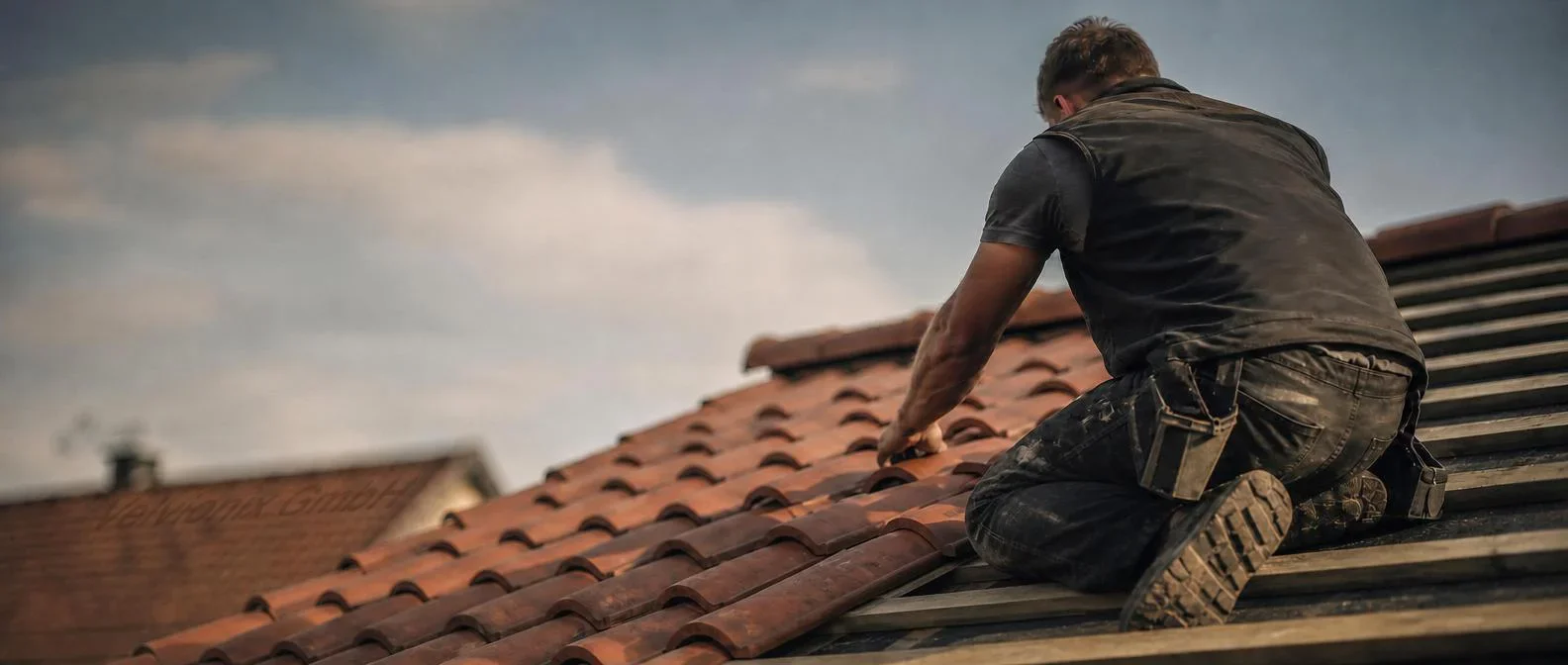
Professional website for roofers and roofing companies
The German roofing trade is structurally fully booked, regulatorily dense and publicly visible like hardly any other construction trade - every roof renovation, every flat-roof overhaul, every roof-side PV installation remains visible from the street years later. At the same time, the paths to commissioning increasingly run online: owners, property managers, architects and insurers research businesses on search systems, read reviews, inspect reference projects and check the trade-roll registration. We build websites for roofing businesses that make master and ZVDH qualifications visible, structure the craft variety (pitched roof, flat roof, green roof, roof-side solar, insulation) clearly, communicate the storm emergency service precisely and classify the BEG/BAFA/KfW funding landscape factually - without forcing your business into an IT project on the side and without promises we could not keep.
Important notice Legal, tax and industry-specific information concerns Germany and expressly identified EU law. It is provided for general orientation and does not replace individual advice. Last review of the cited legal situation: April 2026 Show the full notice
Unless stated otherwise, the legal, tax or industry-specific information on this page reflects the law applicable in Germany and German official and professional practice. Directly applicable EU law and references to other jurisdictions are identified separately. The information was researched with due diligence using sources available as of the stated review date. For binding guidance on your specific project, please contact the competent chamber or a qualified specialist, such as a lawyer or tax adviser. The current statutes and official regulations always prevail.
Why roofing businesses need a high-quality website despite full order books
Roofing work covers different situations, from maintenance and storm damage to pitched-roof, flat-roof, insulation, drainage, green-roof and roof-side solar projects. A website should show the services the business genuinely provides, the responsible qualifications and the route from first contact to assessment. It does not infer demand, project value or commercial results from the market.
Private owners, property managers, architects and public clients need different levels of information. Comparable references, confirmed registrations and clear contacts can support pre-screening. They do not determine an award. B2B information can sit in a clear section; a separate page is commissioned only where enough original material exists.
Urgent roof damage needs genuine availability, the actual service area and a visible phone number. The website does not promise round-the-clock service or a fixed arrival time unless operations support it. Calm safety orientation may be provided, while technical assessment remains with the roofing business and any other required specialists.
What belongs on a modern roofing website
The homepage answers within ten seconds: what is your main focus (pitched roof, flat roof, both), which service area you cover (map or clear list of cities and districts), who is the responsible master craftsman (real photo, no stock material), how to reach you in an emergency (click-to-call phone number, emergency status). Existing authentic project photos are valuable but are not a prerequisite for starting the project. Image selection and optional media are prepared to suit the agreed scope or can be added later. Auto-play videos with dramatic drone flights are popular but are rather an obstacle in a mobile-network emergency - we recommend calm, fast-loading homepages with a clear CTA.
Service pages are structured by craft focus, not by keyword. For the pitched roof: dedicated pages for plain tiles (Biberschwanz), clay tiles, concrete tiles, slate (Altdeutsche Deckung, Schuppendeckung, rectangular cover) and metal roofing (zinc, copper, aluminium, titanium zinc per DIN EN 988) - each with typical use cases, maintenance notes, service life and price range instead of a fixed price. For the flat roof: bitumen sheets, plastic sheets (PVC, FPO, EPDM), green-roof build-up, inspection and maintenance per the ZVDH professional rule for sealing. For green roofs: extensive vegetation (Sedum, moss, typical build-up of 6-15 cm) and intensive vegetation (perennials, lawn, walkable roof gardens) per the FLL guidelines (German research society for landscape development and landscaping) with references to rainwater retention and summer cooling. For PV and solar thermal: substructure, roof penetration, hook systems per the ZVDH professional rule "Solar installations on the roof", clear separation from the electrical connection side. For insulation: on-rafter insulation (classic PIR or mineral-wool build-ups), between-rafter insulation and under-rafter insulation, with references to GEG minimum values and BEG eligibility.
A reference gallery can be an important trust element and requires particular care. We structure it by craft (pitched-roof renovation, flat-roof new build-up, green roof, PV on-roof installation) and add a short fact box per project: construction year of the building, size (sqm), material used, construction duration, particularities where relevant (listed façade, storm damage, renewed substructure). Personal data of the building owner stays out - we use general location descriptions ("single-family house, built 1968, Münster area") instead of addresses, obtain written image consents and pay attention to clean frames in which house numbers, name plates and neighbouring properties are not in focus. Drone shots are aligned with § 21h of the German Air Traffic Regulation (overflight of neighbouring properties only with consent or after case-specific assessment).
The emergency and storm-damage block belongs at the top of the page and in the header, not in a footer. Useful details include a click-to-call phone number, genuine availability windows, the actual service area, pricing logic for travel and emergency work and typical first-response measures (emergency tarpaulin cover, provisional repair). A short safety panel for owners ("in case of acute water ingress, switch off electricity in the affected area, secure valuables, take photos for the insurance, do not climb onto the roof") takes on part of the orientation that otherwise the phone has to provide on early Sunday morning. The key rule: the emergency service is only advertised for the regions where it is actually delivered reliably. Availability claims should therefore match the service that can be delivered consistently.
Funding and energy information remains general and points to current responsible bodies or qualified energy advice. An optional guide area is separately maintained and added only where the business can keep its information current.
As an optional extension, enquiries can run through a lean form with clear mandatory fields (property address, craft context, time horizon, contact details) without file uploads. Enquirers send photos of the damage or of the existing roof directly by email to your business mailbox after the first contact - this avoids malware risks from uploaded files, saves alignment effort and routes communication without detours into your usual email system. The form message itself is delivered via a secure SMTP connection directly to your mailbox; we do not store message content on our systems. You then transfer incoming enquiries into your trade software that your office uses anyway.
Legal framework: HwO Annex A, ZVDH professional rules, GEG, site safety, GDPR and BFSG
Roofing brings together professional qualifications, technical rules, site safety and building-specific requirements. The website shows only confirmed qualifications and explains service boundaries factually. Statements about solar work, insulation, drainage and energy remain limited to the work genuinely offered. The business confirms which evidence, standards and approvals apply to a particular project with the responsible specialist bodies.
Reference images, contact paths and optional forms are planned with data minimisation in mind. Private addresses, names and identifying details appear only with suitable approval. Accessibility is considered in technical and editorial implementation, while a binding legal assessment for the individual business remains outside the website service. Funding and legal information stays general and is reviewed by qualified advisors where needed.
Local visibility, external business profile and reviews
The actual service area depends on location, team, service and project scale. The website names the places or regions genuinely covered without a standard radius. Clear contact details and suitable structured data can support technical classification without promising a particular placement.
External profiles, reviews and directories remain independently managed channels. The website can link to them or embed approved testimonials by separate agreement. Setup, maintenance and responses to individual reviews are not automatically part of the website service.
Property managers, housing companies, architects and public clients may need registration, qualifications, comparable references, contacts and information about tender interfaces. These details can form a B2B section. Additional pages or integrations are agreed only where they match the actual business process.
Frequently asked questions about websites for roofing businesses
Which priorities should a roofing website show first?
The page starts with the services that genuinely define the business, such as pitched roofs, flat roofs, maintenance, green roofs or roof-side solar work. Starter can present them in clear sections. Additional detail pages are commissioned separately only where enough original substance exists.
How can reference projects work without a finished image archive?
Approved existing images are useful but not required. The starting situation, completed scope, materials and particular constraints can already form a credible reference. Further photography or media services can be added later.
How are funding, the GEG and technical rules handled?
The website provides only general, editorially maintained orientation and points to responsible bodies. Building-specific suitability, funding eligibility, deadlines and technical duties require specialist review for the individual case.
Can emergency or storm-damage contact be highlighted?
Yes, where availability, service area and scope are operationally supported. The page makes no blanket round-the-clock promise. Forms, callback paths and external dispatch systems are separately agreed additions.
What does a website for a roofing business cost?
A compact, professionally developed website starts from EUR 599. Additional pages, languages, forms, media and functionality can be added to match the required scope. Managed hosting and ongoing support start from EUR 59 per month. Our Website pricing & options page explains the professional foundation and the available ways to expand it.
More dedicated services in this industry
Looking for a website for a related profession? These dedicated pages might also be relevant:
Website for Painters & Decorators
Present services, project photos, facade work, interior painting, colour advice, service area and enquiry paths clearly - for painting businesses that want to convince visually and be found more easily in their region.
View painter website →Website for Electricians & Electrical Contractors
Present electrical installation, smart home, maintenance, emergency service notes, qualifications, service area and contact paths clearly - for electrical contractors with planned and urgent enquiries.
View electrician website →Website for Carpenters & Joiners
Present furniture making, interior fit-out, kitchens, doors, windows, materials, project gallery and enquiry paths in a high-quality way - for businesses whose work relies strongly on photos and references.
View carpenter website →Website for Plumbing, Heating & HVAC Businesses
Structure plumbing, heating, HVAC, bathroom renovation, maintenance, modernisation, emergency contact and service area clearly - for plumbing and heating businesses with advisory and service offerings.
View plumbing & heating website →Website for Locksmiths & Door Opening Services
Show door opening, cylinder replacement, burglary protection, service area, availability and transparent contact paths clearly - for reputable providers who must build trust before the call.
View locksmith website →Website for Drain Cleaning & Plumbing Emergency Services
Structure emergency help, drain cleaning, sewer inspection, maintenance, service area, availability and enquiry paths clearly - for businesses with urgent local search demand.
View drain cleaning website →Website for Electrical Emergency & Small Installation Services
Present emergency service, cooker connections, sockets, light fittings, small jobs, service area and appointment paths clearly - for planned and urgent electrical enquiries.
View electrical emergency website →Website for Landscape Gardening
Show garden design, paving, terraces, maintenance, seasonal services, project photos and enquiry paths clearly - for businesses with a strong visual portfolio.
View landscape gardening website →Website for Car Repair Shops
Present inspection, repair, tyre service, MOT, brand expertise, workshop photos, appointment path and location clearly - for workshops with regional customers.
View car repair website →More industries
What We Have Already Delivered
Our reference project shows a custom website with a multilingual structure, animated landing page, interactive map and automatic contact form - built from scratch instead of a website-builder template.
View reference project →Full details about the professional Starter foundation, pricing and flexible extensions are available on our “Website pricing & options” page.
View pricing & options →Ready for a website that fits your roofing business?
In the free 30-minute initial consultation we clarify your business structure (single master, partnership, multiple crews), your craft focus areas (pitched roof, flat roof, green roof, solar technology, insulation), your service area, your on-call rhythm and your customer segments (private owners, property managers, architects, commercial). You receive a concrete offer for a website that makes your master title and your ZVDH qualifications visible, puts your reference projects in an effective frame and supports suitable contact paths - rather than pressing you into an interchangeable 'roofer template'. Existing images, finished copy or a logo are welcome but are not prerequisites for starting the project.
Discuss your roofer website