Professional Website for Naturopaths
Naturopaths (Heilpraktiker) operate in a particularly regulated advertising environment - between HWG requirements, critical patient perception and personal treatment philosophy. We build websites that build trust without making health promises: calm, factual, with a clear positioning of your methods and qualifications.
Important notice Legal, tax and industry-specific information concerns Germany and expressly identified EU law. It is provided for general orientation and does not replace individual advice. Last review of the cited legal situation: April 2026 Show the full notice
Unless stated otherwise, the legal, tax or industry-specific information on this page reflects the law applicable in Germany and German official and professional practice. Directly applicable EU law and references to other jurisdictions are identified separately. The information was researched with due diligence using sources available as of the stated review date. For binding guidance on your specific project, please contact the competent chamber or a qualified specialist, such as a lawyer or tax adviser. The current statutes and official regulations always prevail.
Why naturopaths need a particularly careful website
Naturopaths communicate in a particularly sensitive environment: critical public perception, high trust requirements and health-related advertising boundaries come together here. A carelessly worded website can quickly create false expectations. At the same time patients are sceptical and research carefully. A serious, professional website is especially important here.
Prospective patients often search by practice location, methods, qualifications and likely costs. A factual website can answer these questions and support an informed contact decision. It does not promise particular search positions, treatments, recommendations or commercial outcomes.
What belongs on a naturopath website
The homepage opens with a clear, restrained description of the location and genuine practice focus. Existing practice imagery is welcome but not required; a suitable visual direction can be developed within the agreed scope or added later. The main routes lead to methods, contact and qualifications.
Methods are explained in clear sections within the agreed page scope. Additional subpages are optional. What matters is understandable information on process, traditional or professional context, limits and costs; efficacy statements remain factual, source-based and free from healing promises.
The "About me" page is particularly important. Photo, career, state naturopath examination with date and location, additional training with certificate source, memberships in professional associations, personal treatment philosophy. For health topics, expertise and trust are particularly important - a substantial bio helps patients assess your qualification.
The contact area contains the address, telephone number, email and opening hours. A data-minimising request form or an existing appointment booking widget can be added as an optional extension. Health information does not belong in a general website form; professional pre-assessment remains part of the practice workflow.
The service range should not read like an unconnected collection of methods. A clearer approach groups the practice's genuine focus areas, such as consultation and anamnesis within the practice process, manual methods, phytotherapy, acupuncture or accompanying lifestyle offers. Each section explains what the method means in its relevant tradition or discipline, how an appointment works organisationally and where public information ends. Diagnosis and individual recommendations remain part of the personal appointment.
Methods with contested or inconsistent evidence need especially clear website language. Tradition, practitioner experience and scientifically investigated findings are not presented as interchangeable. Sources can be cited where they genuinely support the context; badges, association logos and vague references to studies do not replace an understandable explanation. We prepare this distinction editorially, while the practice confirms professional accuracy and currency before publication.
The first-appointment process can be described factually without anticipating diagnosis or treatment. Useful details include duration, documents to bring, existing findings, cancellation terms and possible follow-up appointments. The website can also explain when prior medical assessment may be advisable. The practice formulates and reviews concrete exclusion criteria, emergency information and medical boundaries with suitable specialist bodies.
Qualifications are organised by relevance. Alongside permission to practise healing in Germany, the page can name substantial education and continuing training, issuing bodies, completion years and genuine areas of work. Attendance certificates are not presented as state-recognised qualifications. Memberships and certificates appear only when their title, validity and usage rights are clear. This helps prospective patients assess the details without claiming special effectiveness or superiority.
Pricing and payer information require a clear separation. The website can explain how initial consultation, follow-up treatment, material costs and possible laboratory services are organised, provided the practice keeps these details current. References to private insurance, civil-service aid or supplementary insurance remain general because reimbursement and conditions depend on the individual contract. Estimates, invoice questions and personal reimbursement checks remain within the practice and payer processes.
Location, rooms and access matter particularly for longer or recurring appointments. The website precisely describes directions, parking, public transport, steps, lifts and actual accessibility. Home visits are mentioned only when genuinely offered, with a factual note on the service area and prior agreement. Maps, review profiles, additional guides and multilingual content are not prerequisites and are agreed separately where needed.
Putting health-related claims into context
Statements about therapies and effectiveness require particular restraint. Healing promises, blanket success rates, claims of no side effects and staged treatment outcomes can create false expectations. We prepare this content factually and in a reviewable form. The practice seeks qualified review of concrete health and advertising statements where needed before publication.
Method pages distinguish transparently between traditional use, practice description and scientific context. Testimonials are not used as evidence of effectiveness and are considered only after qualified review of consent, privacy and wording. Where evidence is inconsistent or contested, the website provides space for an understandable, source-based explanation.
GDPR, accessibility and sensitive data
Health data are special categories under Art. 9 GDPR. For naturopaths there is the added aspect that patients often share sensitive matters (chronic illnesses, mental topics, fertility). We therefore plan contact paths with data minimisation: TLS-encrypted forms, sparse fields, no unnecessary storage of sensitive content on our systems and privacy-conscious embeds. The concrete privacy notice is reviewed externally.
Accessibility can become legally relevant for digital practice services and is an important quality standard regardless. We build WCAG-oriented structures: contrast, keyboard operability, alt texts and plain language. Whether and to what extent the BFSG applies in a specific case is assessed by the practice, chamber or specialist advisor.
The wording should clearly distinguish description, tradition and scientific assessment. A phrase such as "traditionally used for" does not mean the same as supported evidence of effectiveness. We avoid shortened claims that blur these levels and can provide space for sources or an understandable note on the evidence where needed. After professional review, the practice decides which statements it can support; a general template does not replace this individual assessment.
Testimonials, case histories and before-and-after depictions are not necessary to present a practice transparently. A clear professional history, understandable processes, genuine rooms, visible boundaries and calm language can establish context without them. If sensitive materials are considered at all, consent, anonymisation, image rights and health-related statements need qualified review. They are not published without reliable approval.
A professional sourcing process prevents outdated or inaccurate health information remaining online indefinitely. The practice identifies suitable sources and reviews statements on methods, risks and applications. We can structure the material editorially and associate sources clearly, but do not perform medical evidence assessment. A regularly maintained guide is optional and useful only when responsibility, approval and an update rhythm are defined.
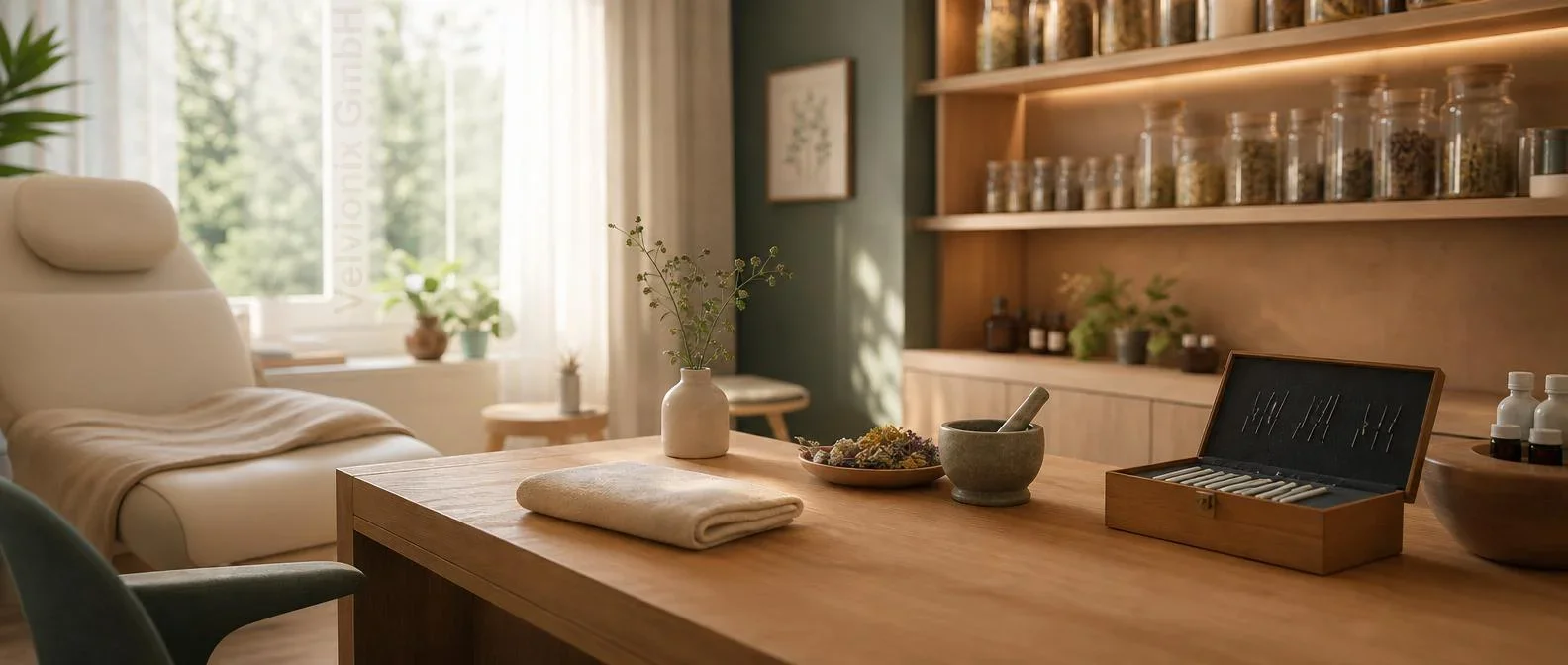
Visual presentation also remains restrained. Images of rooms, working materials or the practitioner can convey atmosphere without staging a treatment situation or outcome. Existing imagery and a logo are not prerequisites. New photography, illustrations, video and additional language versions can be planned separately where needed, with personal and usage rights clarified.
Frequently Asked Questions about Naturopath Websites
What may I write on my naturopath website?
The German Medical Advertising Act (HWG) is an important framework for health-related communication. A factual presentation of methods (acupuncture, homeopathy, phytotherapy, osteopathic-style techniques) with cautious notes where scientific efficacy is unproven or contested is usually the better direction. Testimonials are delicate - we prepare them only with restraint; final review remains with the practice, chamber or specialist advisor.
Can I name and describe therapies concretely?
Yes, but factually. You describe the method ("In acupuncture, fine needles are placed at defined points"), the procedure and typical areas of application according to tradition or teaching. You do not promise healing. We prepare method pages in a fact-oriented way with sources; professional and legal approval remains with the practice or specialist advisor.
How do I put risks and limitations into context?
For certain methods, notes on limits and responsibilities can be useful. We create clear places for cautious notes such as "not medical treatment, please seek medical assessment for acute complaints". Whether concrete notes are required or sufficient is reviewed by the practice with the chamber or specialist advisor.
How do I present my qualifications?
The state naturopath examination, relevant additional training and memberships should be presented transparently with issuing body and year. An About section fits within the agreed page structure; an additional profile page is optional. An existing photo is welcome but not required.
What about insurance and prices?
Payer and pricing information should explain factually whether the practice bills under GebüH and that reimbursement depends on the individual tariff and service. Blanket promises of cost coverage are avoided. Final professional and legal review remains with the practice, payer or specialist advisor.
What does a naturopath website cost?
A compact, professionally developed website starts from EUR 599. Additional pages, languages, forms, media and functionality can be added to match the required scope. Managed hosting and ongoing support start from EUR 59 per month. Our Website pricing & options page explains the professional foundation and the available ways to expand it.
More dedicated services in this industry
Looking for a website for a related profession? These dedicated pages might also be relevant:
Website for Physiotherapy Practices
Structure services, treatment focus areas, team, consultation hours, location, insurance notes and appointment requests clearly - for physiotherapy practices that want to inform factually and be found more easily locally.
View physiotherapy website →Website for Psychotherapy Practices
Present therapy offer, qualifications, process, waiting times, first contact and notes for initial contact calmly and clearly - for practices with a particularly sensitive audience.
View psychotherapy website →Website for Occupational Therapy Practices
Explain target groups, treatment areas, process, prescription requirements, team, location and contact paths clearly - for occupational therapy practices with different patient groups.
View occupational therapy website →Website for Midwives
Structure services, service area, availability, courses, qualifications and contact paths calmly - for freelance midwives, midwifery practices and small teams.
View midwife website →More industries
What We Have Already Delivered
Our reference project shows a custom website with a multilingual structure, animated landing page, interactive map and automatic contact form - built from scratch instead of a website-builder template.
View reference project →Full details about the professional Starter foundation, pricing and flexible extensions are available on our “Website pricing & options” page.
View pricing & options →Ready for your new naturopath website?
In a free initial consultation we discuss your methods, positioning and sensitive website content. You get a concrete offer that fits your practice - factual, restrained and prepared for review.
Discuss your naturopath website