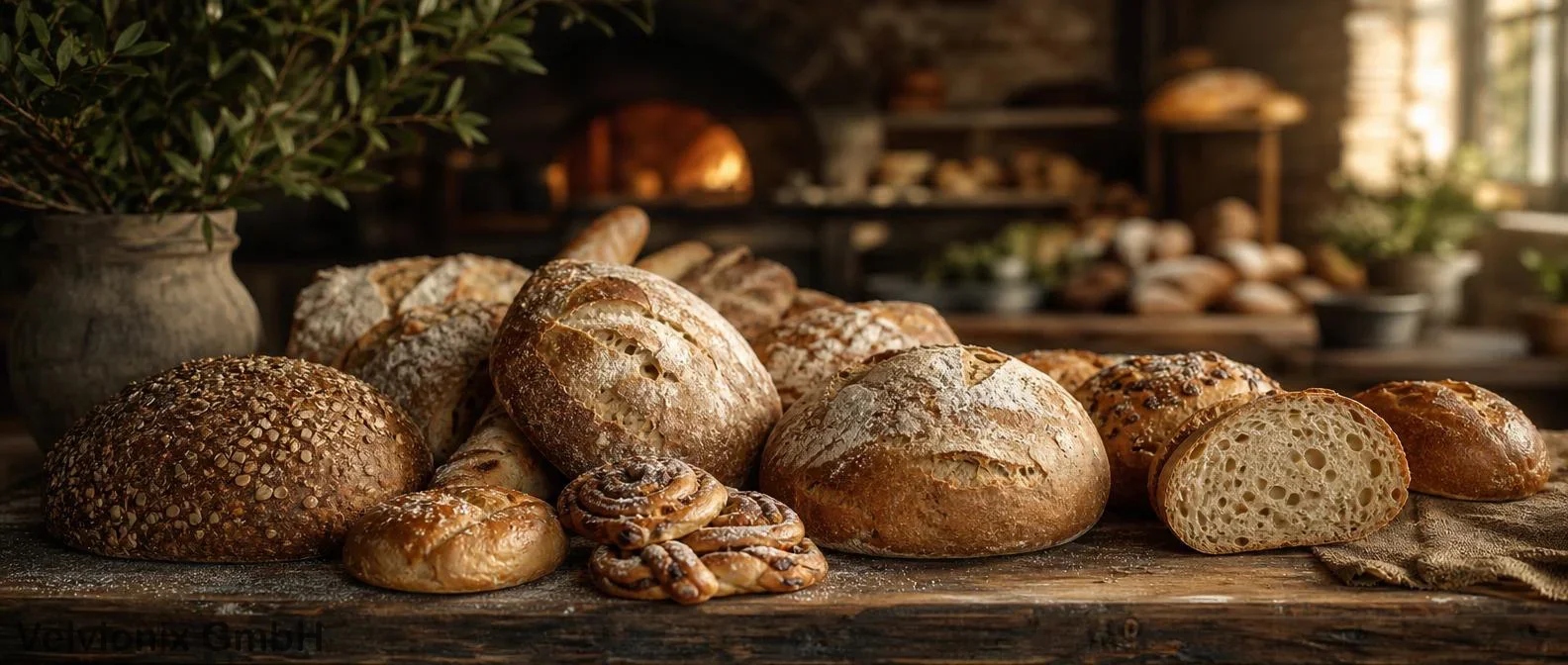
Professional website for bakeries
The bakery trade lives on regular customers, walk-in customers and local reputation - and this is exactly where websites help today that still seemed optional five years ago. When people search for breakfast in the morning, they open mapping services and compare: opening hours, reviews, product range, cake enquiries. We build websites for bakeries that make your craft visible, organise pre-orders cleanly and present your allergen information in an LMIV-oriented way - without you having to manage an IT project.
Important notice Legal, tax and industry-specific information concerns Germany and expressly identified EU law. It is provided for general orientation and does not replace individual advice. Last review of the cited legal situation: April 2026 Show the full notice
Unless stated otherwise, the legal, tax or industry-specific information on this page reflects the law applicable in Germany and German official and professional practice. Directly applicable EU law and references to other jurisdictions are identified separately. The information was researched with due diligence using sources available as of the stated review date. For binding guidance on your specific project, please contact the competent chamber or a qualified specialist, such as a lawyer or tax adviser. The current statutes and official regulations always prevail.
Why bakeries today need their own website
Artisan bakeries can bring their methods, assortment focus, opening hours and contact paths together on a website. It complements business profiles and recommendations without guaranteeing visibility or purchase decisions and without blanket criticism of competitors.
At the same time, buyer behaviour is shifting: custom cakes for birthdays, platters for corporate events, gluten-free breads for coeliac disease, sourdough specialities for the urban middle class - these are all enquiries that no longer happen by a quick word at the counter but are prepared online. A clean, well-maintained website sorts these enquiries, relieves the sales staff and prevents the good work from the bakery from ending up in a price comparison against discount chains.
What belongs on a modern bakery website
The homepage brings craft, assortment, opening hours and contact into a clear visual direction. Existing photos are not a prerequisite: Velvionix can define the visual direction and remit a shoot or additional media separately where needed.
The product page is structured by category (bread, rolls, sweet pastries, cakes, seasonal) and shows per item: name, photo, short description (ingredients, specialty), price and allergens. For bakeries with a fixed rhythm ("bread varieties by weekday"), we build a weekly plan that you maintain once and that rotates automatically - customers love the overview "Monday rye, Tuesday spelt, Wednesday sourdough".
A pre-order or cake-enquiry form is a separately agreed extension. It remains lean, processes no online payment and forwards details directly to the business mailbox; an external shop is linked or embedded only.
Event and catering offers can initially be presented as a compact area with pricing guidance and lead times. A dedicated page, enquiry form or further packages are separately agreed extensions; margins, orders and revenue are not promised.
The about section with owner portrait, a short business history (since when, which generation, which mill, which training) and real photos from the bakery is extremely effective in this industry. People do not buy bread only for taste but for the package of stories around it.
Legal framework: FIR, LFGB and allergen labelling
The EU Food Information Regulation (FIR, EU 1169/2011) and the German VorlLMIEV regulate how you must inform customers about ingredients, allergens, additives and nutritional values. For in-shop sales, notices, labels or a folder at the counter are sufficient - and as soon as you accept online pre-orders for pickup, allergen information must be visible at the moment the order is placed. We create fixed places for allergen information on product pages and in the pre-order form so customers see the notes before submitting. We deliberately do not build a full online shop with cart and online payment (which comes with significantly broader distance-selling and consumer-protection obligations); for that we recommend specialised shop platforms.
The Food and Feed Code (LFGB) prohibits misleading advertising. Terms like "organic", "regional", "artisan", "traditional" should therefore be factually supportable - "organic", for example, only with the EU organic seal and control body number. In the briefing we mark such terms as requiring subject-matter review and use more restrained alternatives, such as "natural sourdough from our own starter" or "flours from a regional mill", where those statements are confirmed by the bakery.
The General Data Protection Regulation (GDPR) applies to every order form. We collect only the minimum necessary data (name, phone for follow-ups, pickup date), avoid tracking cookies in the checkout flow and structure the order path so privacy notes can be included clearly. Final review of imprint, privacy wording and newsletter opt-in belongs with legal advice or the responsible specialist bodies.
Local visibility: Google Business Profile and Maps
A well-maintained Google Business Profile and consistent contact details can complement local orientation. The private practical guide explains the foundations, and a separately quoted consultation is available for personal questions. The business remains responsible for changes and ongoing profile maintenance. No particular ranking is promised.
Structured data can help search systems understand the business type, opening hours and offer without guaranteeing rich results or rankings. A review prompt or data-minimizing review embed is a separately agreed extension; consents and ongoing maintenance remain with the business.
Connecting products, locations and daily guidance
A bakery website needs to distinguish between the established range and daily availability. Bread, rolls, pastries, snacks, cakes and seasonal products can be presented in understandable groups. The page does not promise that every item is always available at every location. It explains order lead times, collection options and the best contact path for specific questions.
Where there are several locations, each needs its own opening hours, address, telephone number and relevant details. Breakfast, cafe seating, Sunday opening, accessible entry and differing ranges are mentioned only where they genuinely apply. A central location overview prevents visitors from combining information from different branches.
Craft and provenance can be communicated credibly when statements remain concrete. Baking methods, original recipes, regional ingredients, long fermentation and special flours appear only after approval by the business. Broad quality claims and invented traditions are avoided. Short insights into the bakery, team and working day communicate more than interchangeable advertising language.
Allergen and ingredient information is taken from records maintained by the business and made easy to find. The website replaces neither in-store information nor professional review. Recipe changes must be reported by the business. For live availability or complex product data, the existing inventory or labelling system remains the leading source.
A pre-order enquiry is a separately agreed extension, not part of Starter. It can ask for product, quantity, collection day and contact details and send the message directly to the business mailbox, but it does not confirm an order. Persistent storage on Velvionix systems and online payment are not intended. Binding orders belong in a suitable specialist system.
Existing product and location photography is helpful but not required. Velvionix can first establish a visual direction that reflects craft, warmth and the everyday business. A shoot, detailed product photography, video or additional image preparation can be agreed separately. Only material with clarified usage rights is used.
The Starter website can organize a homepage, range, locations, business profile and contact across up to four compact subpages. Additional location pages, a blog, further languages, forms, newsletters and external embeds are not automatically included. The structure follows the real operation and can be extended later where useful.
Opening hours, holidays, closures, pricing and product priorities change regularly. Small updates can be handled through ongoing support. Time-limited notices receive a date and are removed afterwards. A dedicated editing area is agreed separately only where the business frequently needs to update content itself.
Preparing the website with operational knowledge
A discussion, current opening hours, a broad product overview and existing location data are enough to begin. Velvionix develops the structure and initial copy. The business then reviews product groups, craft statements, allergens, prices and ordering guidance. Finished text, professional photography and a completed logo are not required.
Before publication, frequently changing details are identified: holiday hours, seasonal products, order deadlines and location differences. A simple reporting and maintenance route is agreed for them. The website stays current without automatically planning a complex editing system or additional functions.
Separating daily trade from pre-orders
The website distinguishes spontaneous availability from planned orders. For daily trade it states range priorities and hours; for cakes, platters and larger quantities it explains lead time and contact. An enquiry becomes binding only after confirmation by the business.
Frequently asked questions about bakery websites
Do I have to label allergens and additives on the website?
As soon as loose goods can be ordered or reserved online, allergen and additive notices can become relevant. This information belongs in your inventory or bakery system; on the website we display approved allergens and notices in a structured way or embed existing provider data. That avoids duplicate maintenance in separate data storage. Concrete labelling is reviewed by the business, specialist provider or advisor.
How do I handle pre-orders for cakes and Sunday rolls?
A lean pre-order or cake-enquiry form can be implemented as a separately agreed extension. Payment and binding confirmation happen in the business; images are exchanged only after initial contact, and form data is not stored persistently on our systems.
Do I need an online shop or is a business-card website enough?
For most artisan bakeries a business-card website (product overview, opening hours, location, contact) plus an optional lean pre-order form with pickup and payment in the shop is enough. We deliberately do not build a full online shop with cart, online payment, shipping and returns - this involves extensive distance-selling and consumer-protection obligations (right of withdrawal, button solution under § 312j BGB, payment processing, PCI-DSS) that fall outside the Starter scope and require specialised shop systems. If you want to ship regionally (Stollen, specialty breads) or supply commercial B2B clients (cafes, hotels), we recommend a specialized shop/payment platform and link to it via subdomain - our website remains the business card, the shop is a separate project.
How do I display seasonal baked goods (Stollen, Easter braid, St. Martin pastries) sensibly?
With a seasonal area that clearly distinguishes permanent range from time-limited products. Seasonal goods are prominently placed on the homepage with sales period, pickup notes and order deadline. For pre-orders (typically Stollen from September for Advent, Easter lambs in Holy Week) we use clear notice boxes instead of shop logic. This prevents misunderstandings and reduces support requests.
What should I communicate about hygiene and certification?
A quality and hygiene area can explain actual processes and substantiated sourcing statements factually. Existing photos are not a prerequisite; Velvionix can define the visual direction and remit optional media separately. Professional and legal statements are reviewed by the business or specialist advisor.
What does a website for a bakery cost?
A compact, professionally developed website starts from EUR 599. Additional pages, languages, forms, media and functionality can be added to match the required scope. Managed hosting and ongoing support start from EUR 59 per month. Our Website pricing & options page explains the professional foundation and the available ways to expand it.
More dedicated services in this industry
Looking for a website for a related profession? These dedicated pages might also be relevant:
Website for Restaurants
Menu, reservation, opening hours, photos and local visibility - for restaurants that want a professional online presence and more direct enquiries.
View restaurant website →Website for Cafes
Breakfast, cakes, drinks, events, atmosphere and opening hours presented clearly - for cafes that want to feel inviting online and be found more easily.
View cafe website →Website for Pizzerias
Present menu, collection, delivery, reservation, delivery area and specialities clearly - independent of delivery platforms and with direct guest contact.
View pizzeria website →Website for Takeaway & Delivery Restaurants
Make menu, prices, delivery area, phone number, ordering path and opening hours easy to reach - especially for mobile searches and spontaneous orders.
View takeaway website →Website for Ice-Cream Parlours & Ice-Cream Cafes
Present flavours, seasonal hours, location, photos, specialities and offers for families or tourists clearly - mobile-friendly and visually appealing.
View ice-cream parlour website →Website for Catering & Event Services
Services, sample menus, photos, references and a structured enquiry form for date, guest count, occasion and special requests.
View catering website →More industries
What We Have Already Delivered
Our reference project shows a custom website with a multilingual structure, animated landing page, interactive map and automatic contact form - built from scratch instead of a website-builder template.
View reference project →Full details about the professional Starter foundation, pricing and flexible extensions are available on our “Website pricing & options” page.
View pricing & options →Ready for your new bakery website?
In a free initial consultation we discuss your product range, seasonal items and real pre-order needs. You receive a concrete offer that fits the size of your business - not the wish list of a large agency provider.
Discuss your bakery website