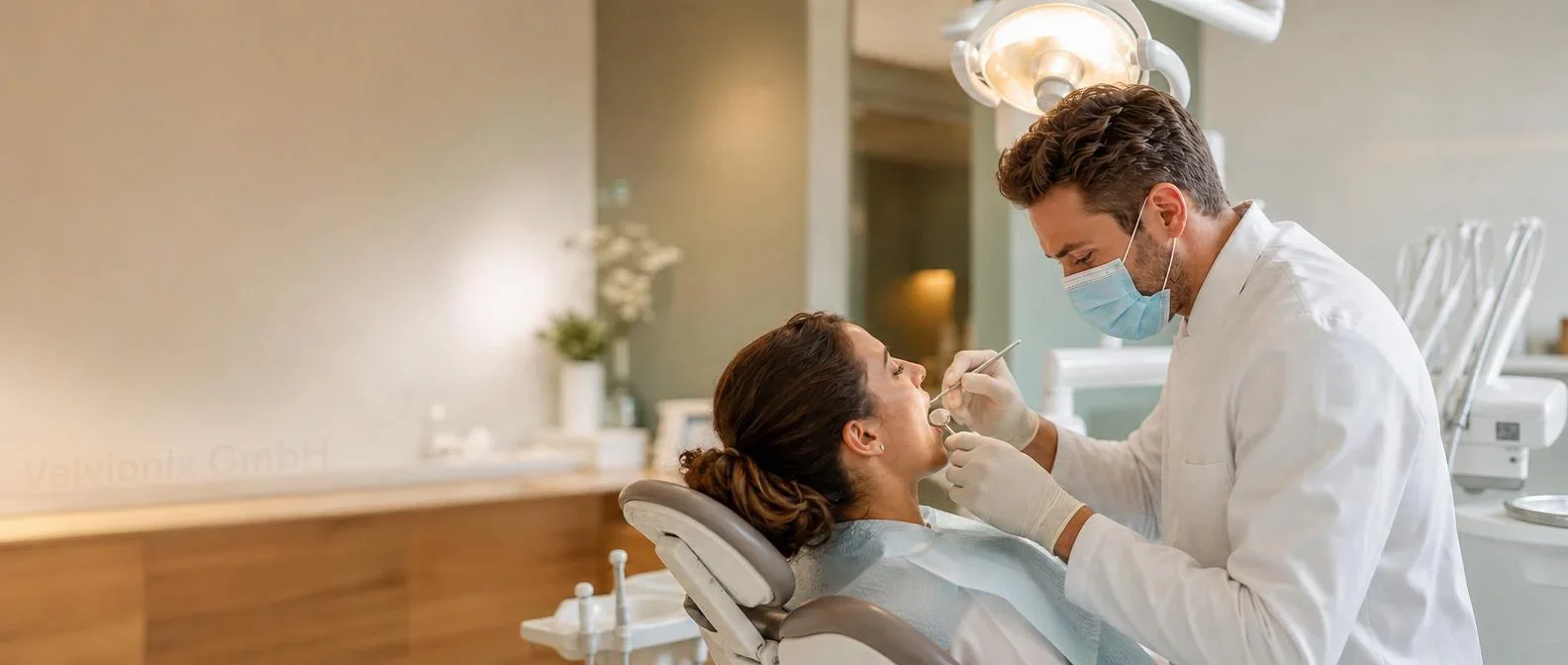
Professional Website for Dental Practices
Your practice website shapes the first impression long before an appointment. We develop dental websites that present focus areas, qualifications, practice procedures and contact routes factually and work well across devices - without promises of healing, rankings or patient acquisition.
Important notice Legal, tax and industry-specific information concerns Germany and expressly identified EU law. It is provided for general orientation and does not replace individual advice. Last review of the cited legal situation: April 2026 Show the full notice
Unless stated otherwise, the legal, tax or industry-specific information on this page reflects the law applicable in Germany and German official and professional practice. Directly applicable EU law and references to other jurisdictions are identified separately. The information was researched with due diligence using sources available as of the stated review date. For binding guidance on your specific project, please contact the competent chamber or a qualified specialist, such as a lawyer or tax adviser. The current statutes and official regulations always prevail.
Why dental practices need a dedicated website
Patients often research implants, dentures, orthodontics, prevention or aesthetic services in advance. A dedicated website brings the practice profile, team, focus areas and contact routes together in a controlled source. External directories and map profiles can complement this information but do not replace a detailed presentation professionally approved by the practice.
The information need is often treatment-specific: How does the first consultation work, which focus areas does the practice offer, which documents are needed and how are costs explained? Clear sections can answer these questions within the agreed page scope. Additional focus pages are optional. The website supports assessment without promising a choice, search position or patient acquisition.
What we build for your dental practice
The homepage calmly introduces the practice profile, opening hours, contact routes and principal focus areas. Existing practice or team photos are welcome but not required; suitable imagery can be developed within the agreed scope or added later. The team is presented factually through relevant qualifications and genuine continuing-education focus areas. An appointment request or booking connection is optional.
The services area reflects the genuine practice profile within the agreed page scope. Implantology, orthodontics, aesthetic dentistry, periodontology, endodontics, prophylaxis or paediatric dentistry can appear as clear sections; additional subpages are optional. Information on process, technology and aftercare receives professional review.
Service content answers practical questions without anticipating a treatment recommendation. It can outline the general route from consultation through diagnostics and planning to aftercare, identify typical organisational requirements and explain when several appointments are common. Concrete suitability, risks, alternatives and prognosis belong in the personal consent discussion. The practice reviews medical details and updates them when procedures or internal workflows change.
Understandable cost orientation is important for dentures, implants and aesthetic services. The website can explain that findings, materials, laboratory work, treatment scope and payer status affect the concrete amount. Treatment and cost plans, reimbursement questions and individual proposals remain within the practice process. Blanket fixed prices, reimbursement promises and claims about durability are not published without a reliable basis.
For anxious patients, a calm section can explain the organisational process: first contact, the option of an initial conversation, breaks, accompanying persons and the forms of support genuinely offered by the practice. The language remains respectful and avoids claims such as "guaranteed pain-free" or "without fear". Sedation, anaesthesia and medical suitability are mentioned only when the practice offers them and has professionally approved the information.
Paediatric dentistry and orthodontics address parents, children and teenagers at the same time. Appointment processes, age groups, prevention, required documents and contact routes therefore need especially clear wording. Images and text must not suggest unrealistic outcomes. A separate parent guide, reminder service or digital medical-history form is optional and requires a suitable maintenance and data-protection process.
The team presentation prioritises medical licence, recognised specialist titles, genuine focus areas, relevant continuing education and languages. Practice staff can be introduced through their responsibilities where they consent. Existing portraits and group photos are welcome but not required. Additional individual profiles, videos and a virtual practice tour are optional media elements and are published only with clear consent and usage rights.
Consultation hours, urgent contact, holiday cover and agreed on-call information must remain prominent and current. The practice decides which numbers and regional services to list. Prescription, findings and image transfers do not belong in a general contact form. Existing specialist systems can be linked where needed; a simple contact route remains limited to non-sensitive organisational matters.
Sensitive topics such as before-and-after images, information on qualifications and advertising statements are prepared with restraint and marked as content that needs professional review. Imprint and privacy policy get a clear structure for medical licence, chamber, competent supervisory authority, professional liability insurance and legal regulations; final review is handled by the practice, data protection officer or specialist advisor.
Accessibility and patient journey
Accessible design helps patients reach the right information more quickly. We pay attention from the start to sufficient contrast, semantic HTML, keyboard operability, meaningful alternative text for images, clear form labelling and screen reader compatibility. This benefits not only people with disabilities but makes the site more pleasant for all visitors.
The patient journey is deliberately simple: contact routes and focus areas are easy to reach through clear navigation. Phone and email belong to the baseline scope; a form or booking widget is optional. Agreed on-call information is displayed prominently and professionally reviewed by the practice. Mobile layouts provide the same clear orientation as desktop.
Technical foundation and ongoing costs
We develop dental websites from scratch with a lean, maintainable architecture instead of continuing a third-party legacy system. The goals are fast delivery, a clear technical foundation and predictable support. We do not promise absolute security, performance or cost advantages over other systems.
We take care of content changes for you: new team members, adjusted opening hours, new focus areas, updated holiday notices. Larger changes - such as an additional focus page - are discussed within the monthly maintenance or as a separate small project. This way you always know what your website costs and do not have to deal with a content management system yourself.
Technical equipment can be explained factually where it is genuinely relevant to the practice process. Digital imaging, scanners, microscopes and specialist treatment units are described as available tools rather than guarantees of a particular result. Brand lists and promotional technology comparisons are usually less helpful than an understandable account of the process. The practice reviews medical benefits and limitations before publication.
Hygiene information also needs an appropriate level of detail. The website can state generally that the practice follows defined reprocessing and quality processes without publishing internal instructions or blanket safety promises. The practice clarifies which standards, certifications and inspections may be named with the relevant bodies. Images from sensitive working areas are used only with clear consent and without identifiable patient data.
Multiple locations and treatment teams need unambiguous assignment. Services, consultation hours, contact routes and team members are associated with the location where they are genuinely available. A shared overview may be sufficient within the agreed page scope; additional location and profile pages are optional. External map profiles can complement the website but are agreed separately and do not support a promise of local visibility.
The website remains reliable only when changes are reflected promptly. New team members, changed hours, holiday cover, new focus areas and discontinued services need a clear approval route. Small updates can be handled through ongoing support. A dedicated login, automated interfaces, additional language versions and an extensive guide are optional extensions with their own maintenance needs.
Mobile use receives particular attention for directions, short-notice contact and appointment preparation. Telephone number, address, opening hours and agreed on-call guidance remain easy to reach without assessing medical urgency through a website button. Forms do not request diagnoses, radiographs or findings. Where the practice offers secure digital routes, the website can optionally link to the existing specialist system.
Frequently Asked Questions about Dental Practice Websites
Am I allowed to show before-and-after images on my dental practice website?
Before-and-after images and aesthetic treatment depictions are legally sensitive and should be professionally reviewed before publication. We prepare the website so that such content can be placed with restraint or deliberately omitted; final assessment remains with the practice, chamber or specialist advisor.
Does my dental practice website have to be accessible?
Accessible websites are a strong quality signal for dental practices and help patients find their way around. We build with a WCAG-oriented structure, good readability, keyboard operation and clear forms.
Can I integrate a common online appointment booking system?
Yes, as an optional extension. We can embed an existing appointment booking widget via iframe or button link. If a specialised system is the better professional fit, we help you choose it, embed it and connect it cleanly to your website. Alternatively, a lean email-forwarding form can be added without health questions, file uploads or permanent storage of messages on our systems.
Can you rebuild my existing dental practice website?
We do not maintain third-party legacy systems; we develop the website from scratch. Existing text, images or logos can be reviewed and reused but are not required. Structure, content and visual direction can be developed together.
How long does it take to build a dental practice website?
The timeline depends on the agreed scope, coordination and approvals and is documented in the proposal. Existing media and text can support the process but are not required to start the project.
What does a professional dental practice website cost?
A compact, professionally developed website starts from EUR 599. Additional pages, languages, forms, media and functionality can be added to match the required scope. Managed hosting and ongoing support start from EUR 59 per month. Our Website pricing & options page explains the professional foundation and the available ways to expand it.
More dedicated services in this industry
Looking for a website for a related profession? These dedicated pages might also be relevant:
Website for Family Doctor Practices
Present consultation hours, acute and appointment-only sessions, prescription and referral routes, cover arrangements and contact clearly - especially for a broad and mixed-age patient base.
View family doctor practice website →Website for Medical Practices
Structure consultation hours, services, team, appointment paths, emergency notes and patient information clearly - for medical practices that want to appear factual, trustworthy and easy to find online.
View medical practice website →Website for Veterinary Practices
Show animal types, consultation hours, emergency service, services, team, location and contact paths clearly - for veterinary practices that want to give pet owners quick orientation.
View veterinary practice website →More industries
What We Have Already Delivered
Our reference project shows a custom website with a multilingual structure, animated landing page, interactive map and automatic contact form - built from scratch instead of a website-builder template.
View reference project →Full details about the professional Starter foundation, pricing and flexible extensions are available on our “Website pricing & options” page.
View pricing & options →Ready for your new dental practice website?
In a free initial consultation, we look at your current online presence and discuss focus areas, appointment system, timeline and review boundaries for sensitive content.
Discuss your dental practice website