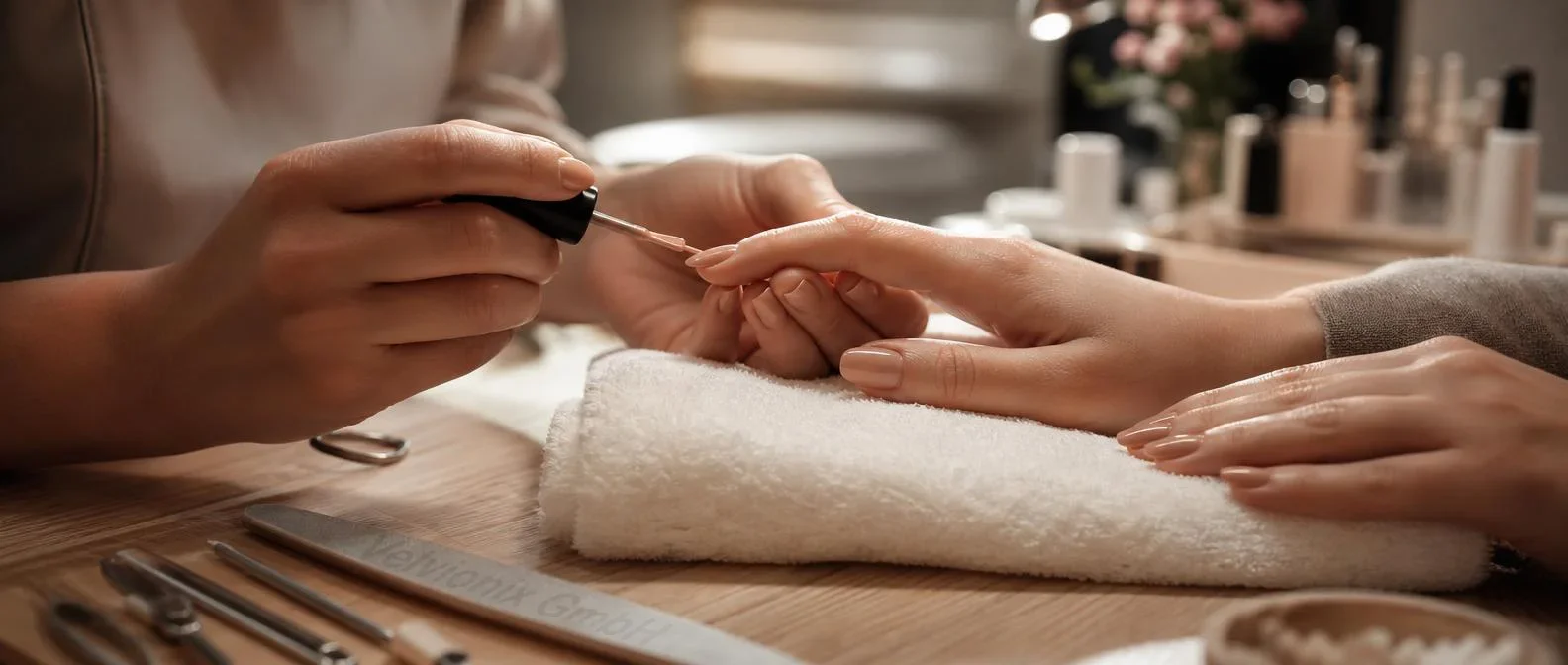
Professional website for nail salons
Nail salons combine visual positioning with pricing, duration and regulatory questions. Velvionix develops websites that distinguish cosmetic services, structure prices clearly and make the salon’s style visible. A portfolio, additional technique pages and external booking embeds are separately agreed extensions; regulatory content remains general orientation for professional review.
Important notice Legal, tax and industry-specific information concerns Germany and expressly identified EU law. It is provided for general orientation and does not replace individual advice. Last review of the cited legal situation: April 2026 Show the full notice
Unless stated otherwise, the legal, tax or industry-specific information on this page reflects the law applicable in Germany and German official and professional practice. Directly applicable EU law and references to other jurisdictions are identified separately. The information was researched with due diligence using sources available as of the stated review date. For binding guidance on your specific project, please contact the competent chamber or a qualified specialist, such as a lawyer or tax adviser. The current statutes and official regulations always prevail.
Why nail salons need their own website today
Prospective clients often compare nail salons online by style, service, price and availability. A website can bring this information together within the salon’s own brand environment; it complements business profiles, social media and booking portals without guaranteeing visibility or bookings.
Industry-standard directory and booking portals can provide additional touchpoints. The website complements them with more room for style, team and pricing philosophy; which channels are useful depends on audience, budget and the existing booking system.
The third layer is regulatory. Nail modelling and nail care have - since the dispute phase around 2020 - been clearly classified as body-care services: not a trade requiring a licence under the German Trade Code (HwO), a trade registration is sufficient, and the master craftsman requirement explicitly does not apply. At the same time the salon moves within several parallel regulatory circles: the EU Cosmetics Regulation (EC) No 1223/2009 with its classification of certain UV acrylates such as HEMA as professional-use-only products, NiSV Annex 3 for LED and UV curing, hygiene requirements under TRBA 500/250 and ASR workplace rules, the HWG in its extension to statements about nail health and the clear distinction from medical foot care under the German Podologengesetz (PodG). A website that communicates this frame calmly and factually creates trust - both with customers and with a potential supervisory authority inspection.
The fourth factor is organisational. Nail salons work with tightly scheduled appointments, long treatment durations (a full new modelling with nail art takes 90-150 minutes), high material and equipment investments and a high share of returning customers on a 3-4 week rhythm for refill and care. A website that explains the price and duration of each service itself, makes the portfolio visible and leads directly into a specialised booking system can reduce phone enquiries and gives the team more time for the treatment at the table.
What belongs on a modern nail salon website
The homepage answers compactly which style the salon represents, which core services it offers and how to make contact. Authentic imagery is helpful but not a prerequisite: Velvionix can define the visual direction and remit optional production or preparation separately.
We first structure services and techniques as clear sections covering the process, duration, price guidance and cosmetic boundaries. Selected in-depth technique pages can be useful as separately agreed extensions, depending on the range and search demand; fixed word counts or one subpage per technique are not required. The language remains professional and honest, without superlatives, healing claims or guarantees.
A structured price and duration overview can provide orientation and reduce routine questions. Gift cards or external voucher widgets are separately agreed extensions; payment and redemption remain in the relevant specialist system or on site.
A portfolio gallery can make style and craft range visible. Its scale and categories follow the available approved material rather than fixed image counts. Existing photos are not a prerequisite; Velvionix can define the visual direction and remit optional media separately.
A booking embed or lean enquiry form is a separately agreed extension. External specialist systems are embedded via iFrame or button link; contract, customer records, POS and payment remain with the provider. Forms capture only necessary contact data and do not persist message content on our systems.
A blog or guide area is a separately agreed extension. Where agreed, articles remain factual, avoid healing or treatment claims and refer suspected medical conditions to medical or podiatry assessment.
Hygiene, distinction from podology and team qualification
Hygiene is a core quality feature in the nail salon that can be credibly represented on the website without sounding over-promoted. The basis is provided by occupational health and safety law: the Technical Rules for Biological Agents (TRBA 500 and TRBA 250 in their current version) set the basic requirements for hygiene, personal protective equipment and instrument reprocessing, and the workplace rules (ASR) regulate indoor air, lighting and workstation ergonomics. We build a short hygiene section into the website that factually names the key points: single-use files and polishers, reprocessing of instruments following disinfection and sterilisation guidance (RKI recommendations as professional orientation), glove use when working on the cuticle area and in case of potential blood contact, regular surface disinfection of the workstation.
The distinction from medical foot care is as important on the website as it is professionally. Medical foot care is a protected profession in Germany under the German Podologengesetz (PodG); only podologists with state recognition may use that title and perform certain services (treatment of ingrown toenails with inflammation, diabetic foot, pathological callus changes). A nail salon offers cosmetic foot care - nail shortening and care, removal of cosmetic callus, lacquering and pedicure polish - and refers customers with medical indications to a podology practice. We phrase the pedicure page accordingly: "cosmetic foot care" as clear designation, no healing claims, no terminology from the medical field, a short factual referral block to podology for corresponding symptoms.
The team is the second major trust anchor. One short profile card per nail artist: a real portrait, name or artist name, focus areas (French and nude, nail art and designs, Japanese nail care, refill specialist), training and further education with the stocked product manufacturers, years of experience and - if desired - one sentence on personal handwriting. The tone is calm and professional, without superlatives, without rankings. In many salons apprentices or junior staff additionally work on defined services - this can be shown transparently, often with an adjusted price, and acts as a quality signal for the salon\'s training culture.
Frequently asked questions about nail salon websites
How do I describe LED/UV curing and NiSV Annex 3 factually on the website?
Equipment and methods are described factually through confirmed purpose, process and available qualifications. The website does not infer medical effects or provide a compliance assurance. Requirements for a concrete device and offer are reviewed by the studio using manufacturer information, professional advice and responsible authorities.
How do I communicate professional-use-only products (HEMA, Di-HEMA TMHDI) in the product section?
Since September 2020 certain UV acrylates (including HEMA and Di-HEMA Trimethylhexyl Dicarbamate) are classified as "Only Professional Use" under the EU Cosmetics Regulation (EC) No 1223/2009 - they may only be applied by trained professionals and may not be sold to end customers. For the studio this means: the product communication on the website names the stocked brands and lines as information about your professional orientation, but deliberately avoids a shop character. We build a product and technology section that makes clear that not every product is suitable for home use, that professional application is part of the service, and that for aftercare products (cuticle oil, hand cream, cuticle care) a small, deliberately curated selection is available for on-site purchase - without online shopping cart, without shipping, without payment processing on the website. This structure is built in line with the EU Cosmetics Regulation (EC) No 1223/2009 and prevents the studio website from inadvertently slipping into the regime for cosmetic product retailers with CPNP notification obligations.
Why do I deliberately not address nail fungus and pathological nail changes as treatment topics on the website?
Nail fungus (onychomycosis), ingrown toenails with inflammation, diabetic foot problems and other pathological nail changes are medical indications and therefore fall into the responsibility of dermatologists and - for toenails - podologists (medical foot care under the German Podologengesetz, PodG). Applying nail extensions over a fungus-infected nail is professionally wrong, can aggravate the condition and is problematic in advertising terms, because any healing or treatment claim around a disease touches the Medicinal Products Advertising Act (HWG) and the boundary to medical activity. We therefore phrase the website consistently as cosmetic: nail care, nail beautification, manicure and cosmetic foot care as wellbeing and aesthetic services. For pathological changes the site carries a brief, factual note with the clear recommendation to consult a dermatologist or podology practice before any nail modelling. That protects customers, cleanly delimits the service portfolio and keeps the website aligned with HWG-oriented phrasing.
How do I handle influencer labelling (§ 5a UWG) in portfolio and social media sections?
Posts, recommendations and collaborations are embedded only with cleared rights and labelling appropriate to the content. Publication and ongoing maintenance remain with the account and business. The website does not copy unreviewed posts automatically and promises neither reach nor enquiries from an embed.
Which booking widget fits, and who is the data processing partner for appointment booking?
If a specialised system is the better professional fit, we help you choose it, embed it and connect it cleanly to your website. We embed an existing widget as a separately agreed extension via iFrame or button link. The contract, data processing and ongoing maintenance remain directly between the salon and provider; the service catalogue and payment functions are configured in the specialist system.
What does a website for a nail salon cost?
A compact, professionally developed website starts from EUR 499. Additional pages, languages, forms, media and functionality can be added to match the required scope. Managed hosting and ongoing support start from EUR 39 per month. Our Website pricing & options page explains the professional foundation and the available ways to expand it.
More dedicated services in this industry
Looking for a website for a related profession? These dedicated pages might also be relevant:
Website for Hair Salons
Present services, pricing, salon style and appointment options clearly - for hair salons that want a professional online presence and better local visibility.
View hair salon website →Website for Beauty Studios
Present treatments, prices, duration, care notes, photos and enquiry paths clearly - for beauty studios with services that need explanation and high trust requirements.
View beauty studio website →Website for Barbershops
Show haircuts, beard care, prices, atmosphere, team and booking paths clearly - for barbershops that want to combine style, craft and local visibility.
View barbershop website →Website for hair removal studios
Explain methods, treatment areas, process, prices, notes and consultation options clearly - for studios that want to build trust before the first appointment.
View hair removal studio website →Website for Tattoo Studios
Present styles, artists, portfolio, hygiene, booking process, consultation and enquiries clearly - for tattoo studios that want to show trust and visual quality.
View tattoo website →More industries
What We Have Already Delivered
Our practice example shows a custom website with a multilingual structure, animated landing page, interactive map and automatic contact form - built from scratch instead of a website-builder template.
View examples →Full details about the professional Starter foundation, pricing and flexible extensions are available on our “Website pricing & options” page.
View pricing & options →Ready for a website that fits your nail salon?
In the free initial consultation we discuss your service portfolio, preferred booking software, portfolio style and target audience focus. You receive a concrete offer for a website that makes your salon clearly visible and can reduce phone load through better information upfront.
Discuss your nail salon website