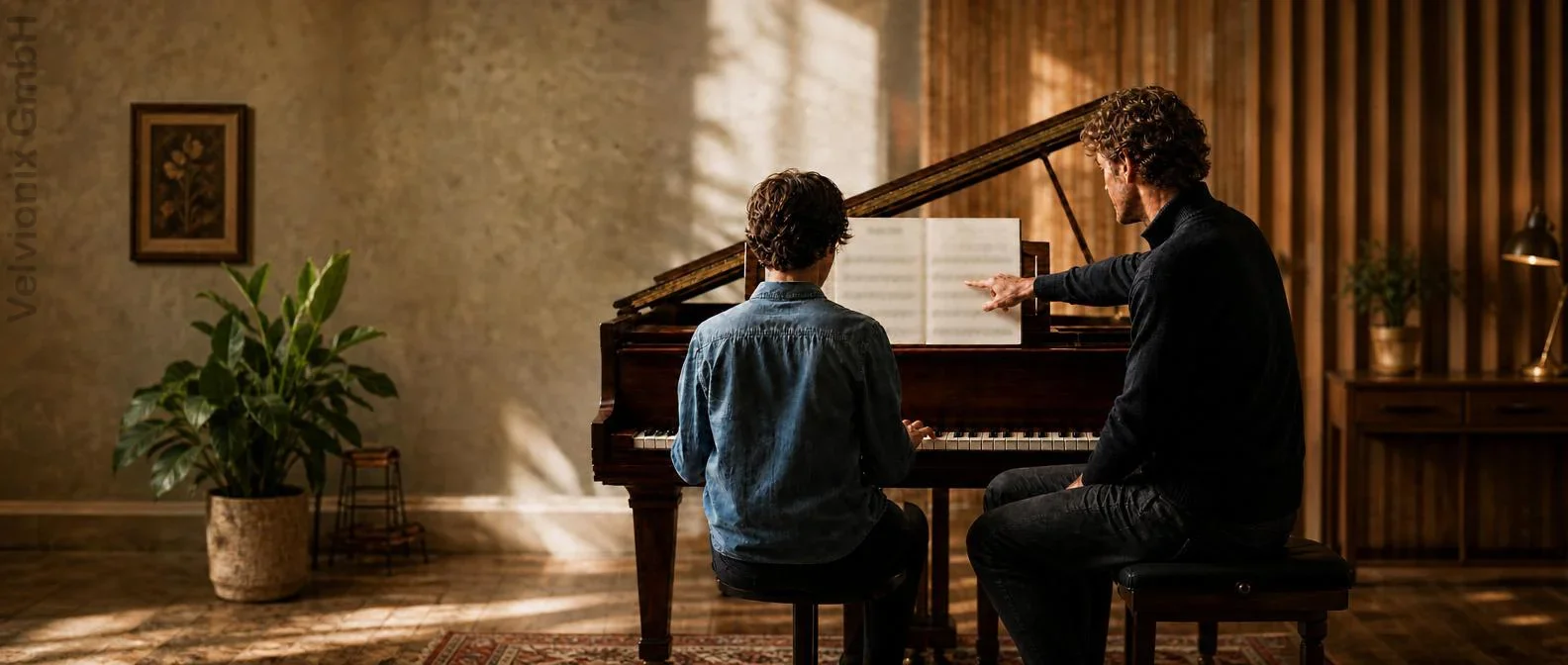
Professional website for music schools & instrumental tuition
A music school website should make instruments, tuition formats, teachers, fees and events easy to understand. We create an inviting presence for children, parents, teenagers and adults.
Important notice Legal, tax and industry-specific information concerns Germany and expressly identified EU law. It is provided for general orientation and does not replace individual advice. Last review of the cited legal situation: April 2026 Show the full notice
Unless stated otherwise, the legal, tax or industry-specific information on this page reflects the law applicable in Germany and German official and professional practice. Directly applicable EU law and references to other jurisdictions are identified separately. The information was researched with due diligence using sources available as of the stated review date. For binding guidance on your specific project, please contact the competent chamber or a qualified specialist, such as a lawyer or tax adviser. The current statutes and official regulations always prevail.
Orientation before the first enquiry
Children, parents, teenagers and adults look for music tuition with different experience and objectives. A music school website should therefore do more than list instruments. It needs to connect the tuition offer, teachers, locations, fees and route to a trial lesson clearly. Ensembles, concerts and exam preparation should take a prominent role only where genuinely offered. A warm visual impression and dependable practical information need to work together.
The website orders these questions along the route from initial information to an enquiry. Learners and families should be able to compare the offer, practical arrangements and contacts without defining a complete course of tuition or training online.
- Which instruments, vocal subjects, age groups and experience levels are taught?
- Which tuition formats, locations, times and fee models currently apply?
- How do prospective pupils find a suitable teacher and arrange a trial lesson?
- Which ensembles, events and additional musical opportunities genuinely exist?
Offer, process and practical organisation
Education services are explained through audiences, learning situations, formats and practical conditions. Understandable everyday language matters more than a long collection of internal terms. The professional core includes:
- Tuition offer: instruments, voice, audiences and levels are organised clearly around the actual offer.
- Formats: individual, group, ensemble, in-person and online tuition appear with their actual conditions.
- Teachers: profiles connect instrument, education, artistic experience and teaching approach.
- Organisation: locations, tuition times, holidays, fees and cancellation information are easy to find.
- Getting started: trial lesson, consultation, registration and matching with a teacher form an understandable process.
Team, teaching and trust evidence
Trust comes from current offer information, understandable team profiles and a realistic view of learning and training. Photography, feedback and further insights can be supplied once rights and approvals are settled.
- Personal teacher profiles with musical and educational experience rather than interchangeable short descriptions.
- Original photography of tuition, premises or concerts where consent and image rights are settled.
- A current tuition offer with clear locations, audiences and contacts.
- Approved views of ensembles, performances and projects without pressure or promises of achievement.
Turning the existing offer into a clear website
Offer lists, team details, pricing and scheduling information are shaped into a consistent website structure. Missing images or finished copy are not prerequisites; clear responsibility for content and approval matters most:
- We organise instruments, audiences, formats, locations, team, fees and established contact routes.
- The structure leads from the desired tuition through teachers and practical details to a trial-lesson enquiry.
- Existing lists and team details are made consistent; completed portraits and concert images are not prerequisites.
- Before publication, you check the offer, fees, dates, image approvals and event information.
A compact foundation and relevant options
The Starter can present the central tuition offer, teachers, essential practical information and contact in a compact form. Pupil administration, timetabling, payment functions, a learning platform, ticket sales and an extensive media library are not included. Existing systems and further content are connected only as explicitly agreed additions.
Options are not presented as mandatory modules. Each should solve a particular task and is planned only when its content, maintenance and technical operation are clear:
The input is sent by email directly to the customer's mailbox; permanent storage on our systems is not intended.
- Additional instrument or offer pages can explain particularly important tuition in greater depth.
- A trial-lesson form can be added separately and collects only necessary initial details.
- An event calendar, galleries and ticket links are separate editorial and technical elements.
- Online tuition, multilingual content and digital resources are planned according to genuine need.
Handling sensitive information responsibly
Consent, image rights and data minimisation are particularly important for photographs, video and information about pupils who are minors. Public concert and examination notices should contain only the information intended for the relevant audience.
Fees, contract terms, events, tax treatment and music use can require different forms of review. The website can explain services and broad processes clearly; specific legal, tax and licensing statements should receive qualified review.
Prospective pupils also compare music schools by musical direction and practical fit. Clear information about which teacher offers each instrument, useful prior experience, tuition locations and how changes between formats are discussed is therefore valuable. The website provides orientation on these points without making an educational decision or assigning a pupil to a particular teacher before a personal conversation.
Useful content for prospective learners
Useful content can answer common questions and provide insight into teaching or training. It needs no fixed volume, but it does require dependable authorship and maintenance. Suitable themes include:
- Introductions to instruments, teaching approaches and options for different experience levels.
- Teacher profiles showing a personal relationship with music and education.
- Current information on concerts, ensembles and projects with settled image rights.
- Guidance for parents and adult learners preparing for a trial lesson.
Frequently asked questions about music-school websites
Which questions should the website answer first?
The most important points are: Which instruments, vocal subjects, age groups and experience levels are taught? Which tuition formats, locations, times and fee models currently apply? How do prospective pupils find a suitable teacher and arrange a trial lesson? Which ensembles, events and additional musical opportunities genuinely exist?
Which services and content belong on the page?
The selection follows the real offer. These points provide a professional starting place: Tuition offer: instruments, voice, audiences and levels are organised clearly around the actual offer. Formats: individual, group, ensemble, in-person and online tuition appear with their actual conditions. Teachers: profiles connect instrument, education, artistic experience and teaching approach. Organisation: locations, tuition times, holidays, fees and cancellation information are easy to find. Getting started: trial lesson, consultation, registration and matching with a teacher form an understandable process. A compact website does not need to give every possible service equal space.
Do copy, photography and credentials need to be ready before the project starts?
No. We begin with the knowledge available and prioritise missing material. Possible trust evidence includes: Personal teacher profiles with musical and educational experience rather than interchangeable short descriptions. Original photography of tuition, premises or concerts where consent and image rights are settled. A current tuition offer with clear locations, audiences and contacts. Approved views of ensembles, performances and projects without pressure or promises of achievement. Only professionally reviewed and approved material is published.
How is the website developed?
The process is adapted to the project. Typical steps are: We organise instruments, audiences, formats, locations, team, fees and established contact routes. The structure leads from the desired tuition through teachers and practical details to a trial-lesson enquiry. Existing lists and team details are made consistent; completed portraits and concert images are not prerequisites. Before publication, you check the offer, fees, dates, image approvals and event information.
What belongs in the compact foundation, and what is optional?
The Starter can present the central tuition offer, teachers, essential practical information and contact in a compact form. Pupil administration, timetabling, payment functions, a learning platform, ticket sales and an extensive media library are not included. Existing systems and further content are connected only as explicitly agreed additions. Possible separate additions include: Additional instrument or offer pages can explain particularly important tuition in greater depth. A trial-lesson form can be added separately and collects only necessary initial details. An event calendar, galleries and ticket links are separate editorial and technical elements. Online tuition, multilingual content and digital resources are planned according to genuine need.
How do we handle sensitive or regulated statements?
Consent, image rights and data minimisation are particularly important for photographs, video and information about pupils who are minors. Public concert and examination notices should contain only the information intended for the relevant audience. Fees, contract terms, events, tax treatment and music use can require different forms of review. The website can explain services and broad processes clearly; specific legal, tax and licensing statements should receive qualified review.
What does this website cost?
A compact, professionally developed website starts from EUR 499. Additional pages, languages, forms, media and functionality can be added to match the required scope. Managed hosting and ongoing support start from EUR 39 per month. Our Website pricing & options page explains the professional foundation and the available ways to expand it.
More dedicated services in this industry
Looking for a website for a related profession? These dedicated pages might also be relevant:
Website for Driving Schools
Present licence classes, prices, theory hours, instructors, registration, intensive courses and contact paths clearly - for driving schools that want to appear modern online and reach new learners more effectively.
View driving school website →Website for Tutoring
Present subjects, year groups, school types, teachers, trial lesson, prices and enquiry path clearly - for tutoring centres, learning support and independent tutoring providers.
View tutoring website →More industries
What We Have Already Delivered
Our practice example shows a custom website with a multilingual structure, animated landing page, interactive map and automatic contact form - built from scratch instead of a website-builder template.
View examples →Full details about the professional Starter foundation, pricing and flexible extensions are available on our “Website pricing & options” page.
View pricing & options →Ready for a clear music school website?
In a free initial consultation, we clarify instruments, formats, audiences and the website plan.
Discuss your music school website