No Nasty Surprises: The Lean QA Process for Small Teams
2026-02-03
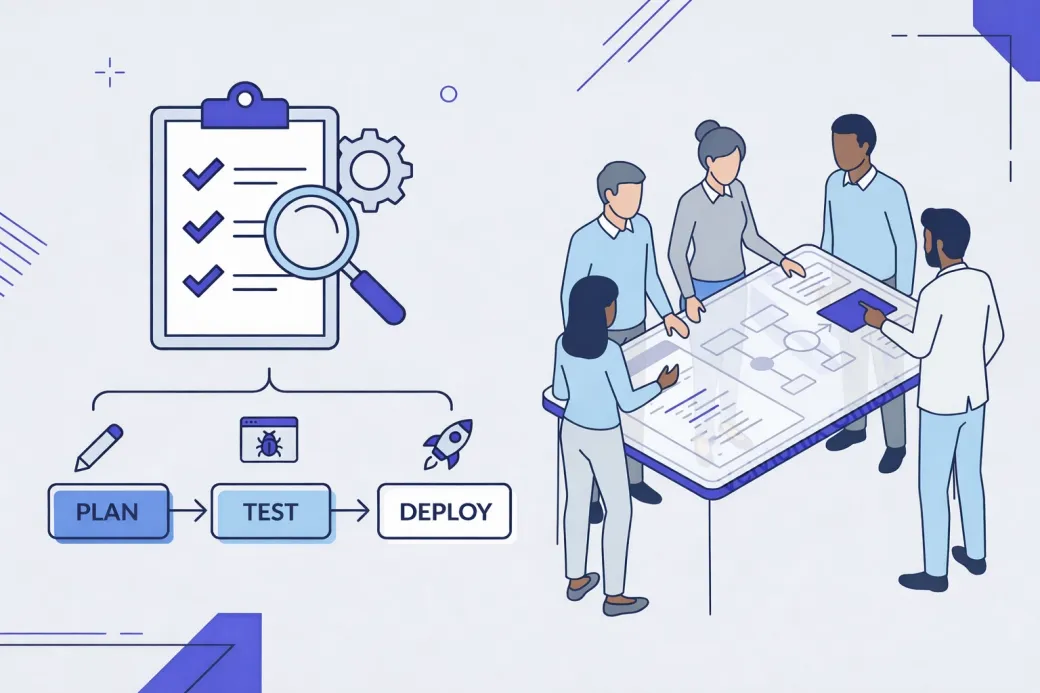
This image is protected by copyright. Use only with explicit permission.
© 2026 Velvionix
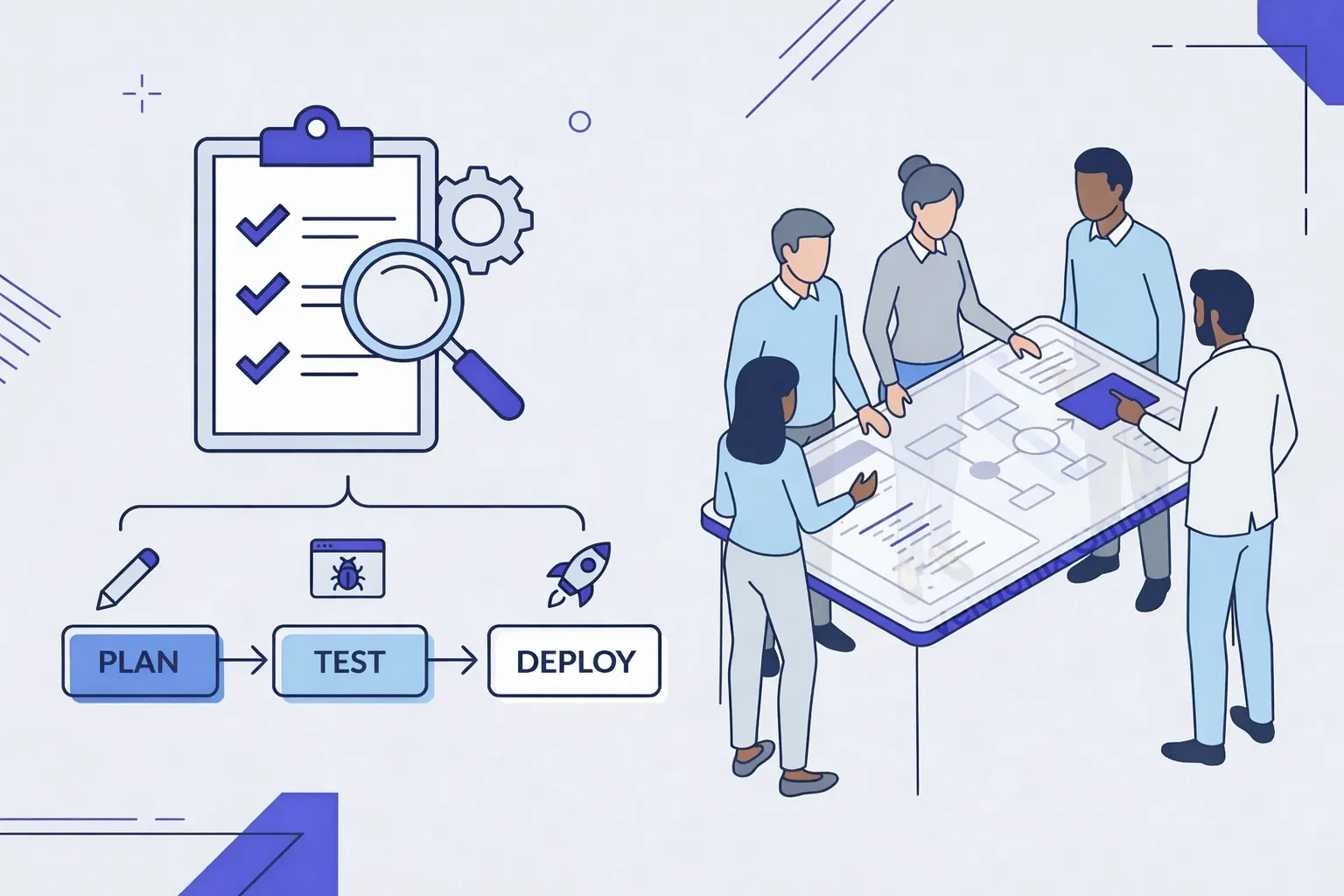
Key Takeaways
Why Small Teams Are Especially Vulnerable to Surprises
Small teams know the pattern: You release “just a quick” change and shortly after, customers reach out. Suddenly an important flow doesn’t work anymore, appointments get missed, support eats up time, and the team works in reaction mode.
The problem is rarely lack of effort. It’s missing structure. Without a clear process, stress decides every time what gets tested, what gets postponed, and what “somehow fits.” This leads to surprises - and surprises are expensive in small teams because there’s barely any buffer.
Many believe quality means more meetings, more documentation, more bureaucracy. The opposite is true: A lean QA process is primarily a relief process. It ensures you don’t have to constantly play firefighter.
What Quality Assurance Really Means for Small Teams
QA stands for quality assurance. It doesn’t mean “another department” - it’s a simple, fixed way of working: make risks visible early, keep the most important flows stable, and plan releases so they don’t become a lottery every time.
The core for small teams is focus. You don’t have to test everything. You have to test the right things - consistently. For this, you need three building blocks: clear priorities, clear release criteria, and a repeatable rhythm.
Defining the Critical Flows
If your application directly affects money, appointments, or inquiries, then first define the three to five most important flows that must never break. These typically are: registration or login; contact or appointment process; payment or confirmation; what customers perceive as “the result.” These flows get tested before every release, without discussion.
If you frequently release small changes, then establish a short, fixed testing routine that always runs the same way. Not as a mammoth test day, but as a compact block. The goal isn’t perfection - it’s safety: “The critical flows work, the site looks stable, nothing obvious is broken.”
If you regularly have discussions about whether something is “done,” then define release criteria that everyone understands. These aren’t novels. It’s enough to clarify: What change was made; what the expected state looks like; what must demonstrably work; who gives final approval. This reduces friction and prevents unfinished things from accidentally going live.
Bug Triage: Urgency Instead of Panic
A lean process also thrives on bugs not being handled chaotically. Bug triage means: briefly check what’s really urgent, what can wait, and what isn’t a real bug. For small teams, this is gold because otherwise a mountain of reports emerges that paralyzes development.
If a bug directly blocks customers or prevents appointments, it gets immediate priority and is resolved promptly. If a bug is just “ugly” but doesn’t disrupt any flow, it gets planned and not fixed in passing. If a bug rarely occurs and has no clear benefit, it’s consciously accepted or cleanly documented - rather than lying around for weeks as an open risk.
Case Study: Studio with Online Booking System
A small studio has an online booking system and regularly releases changes to offerings and availability. Without a fixed QA rhythm, there were constant follow-up questions because bookings suddenly wouldn’t go through or confirmations were missing. With a lean process, three critical flows were checked before every release, and once a week there was a short triage round for new bugs. Result: less support effort, less stress before weekends, and more peace in daily operations.
Automated Checks as a Safety Net
The role of “automated checks” is also important. This sounds technical but is fundamentally simple: recurring checks shouldn’t be manually reinvented every time. For small teams, a small start is often enough: automatic basic checks for the most important pages and a simple alarm when something is obviously unreachable. This doesn’t replace content testing, but it prevents embarrassing outages.
The Real Effort - Unvarnished
Realistic about effort: A lean QA process costs some discipline at the start. You need to define flows, establish release criteria, and maintain the rhythm. Afterward, you save time because fewer unplanned interruptions occur. What matters is starting small and staying consistent. A process that “only sometimes” applies is worthless.
What Endangers Quality
Common Questions About Lean QA
We're just a small team - is QA even worth it?
Especially then. Small teams have little buffer. A lean process prevents constantly working in emergency mode.
What's the most important first step?
Define the few flows that must never break, and test them before every release.
How much time should QA cost per release?
As little as possible, as much as necessary. For many teams, short, fixed test blocks are enough when they consistently focus on critical flows.
Do we need a dedicated person for this?
Not necessarily. What matters is that responsibility and approval are clear, even when multiple roles are involved.
What is "bug triage" in simple terms?
A quick decision about which bugs are immediately important, which get planned, and which have no real need for action.
How do we prevent QA from becoming a bureaucracy monster?
Keep it small: few flows, clear criteria, fixed rhythm. Everything that doesn't help gets dropped.
Does a lean process also fit websites without "big software"?
Yes, if the website is more than a business card, for example with appointment or inquiry processes. That's exactly where stability counts.
Make Quality Predictable Now
If you want to solve this topic properly, we implement it as part of our services in a structured way - not as a loose individual measure. Please use the contact form and select the appropriate options. We will get back to you with a brief assessment of the most sensible approach.
Sources
Disclaimer: The operators of linked pages are solely responsible for their content. We assume no liability for linked content. This article was created with the assistance of AI-powered research and writing tools.
- [1] Atlassian : "Bug Triage: Definition, Examples, and Best Practices"
https://www.atlassian.com/agile/software-development/bug-triage - [2] Martin Fowler : "The Practical Test Pyramid"
https://martinfowler.com/articles/practical-test-pyramid.html - [3] Google Testing Blog : "SMURF: Beyond the Test Pyramid"
https://testing.googleblog.com/2024/10/smurf-beyond-test-pyramid.html - [4] OWASP : "OWASP Web Security Testing Guide"
https://owasp.org/www-project-web-security-testing-guide/ - [5] ISO : "ISO/IEC 25010:2011 - Systems and software engineering"
https://www.iso.org/standard/35733.html
Related Articles

This image is protected by copyright. Use only with explicit permission.
© 2026 Velvionix
Maintenance, Security, Peace of Mind: Why Lean Websites Cost Less
2026-02-04

This image is protected by copyright. Use only with explicit permission.
© 2026 Velvionix
Multilingual Websites: When They Actually Bring More Inquiries
2026-02-04

This image is protected by copyright. Use only with explicit permission.
© 2026 Velvionix
Legally Compliant Online: What Your Website Really Needs
2026-01-30
Comments
No comments yet.
Be the first to comment!
Write a comment
To write a comment, please enable the comment function in your privacy settings.
Write a comment